
|
5 days in Hanoï: our arrival and first steps in the country
A trip in Vietnam during winter – part 1
Published
on
February, 18th 2024


- Our trip and our arrival in Hanoi
- Stroll through the old quarter, SIM card purchase and currency exchange
- Street food tour, Hoa Lo prison and shopping at BRMG
- A walk around the lake at the west: in-between history and shopping zone
- Long Bien bridge and an evening without motorised vehicles !
- In a nutshell

Our trip and our arrival in Hanoi
It all starts at Paris Charles de Gaulle, our departure airport. Our flight is bound for Hanoi and is operated by Xiamen airlines, a Chinese company offering very competitive prices. However, all their flights have a layover in Xiamen with a maximum transit of 72 hours without a visa by that time. Our layover is 7 hours, which should allow us to stretch our legs between our 2 flights.
In the context of our « long-term trip », we are taking only a one-way flight, costing us 392€/person. Despite the 45-day visa exemption for Vietnam with european passport, we got an e-visa to ensure that our lack of proof of leaving the country does not cause any issues. During check-in, we present our visa and everything goes smoothly. We later meet several people with a one-way ticket and no visa who encountered no problems either at the airport or during immigration; it seems that we were extra cautious.
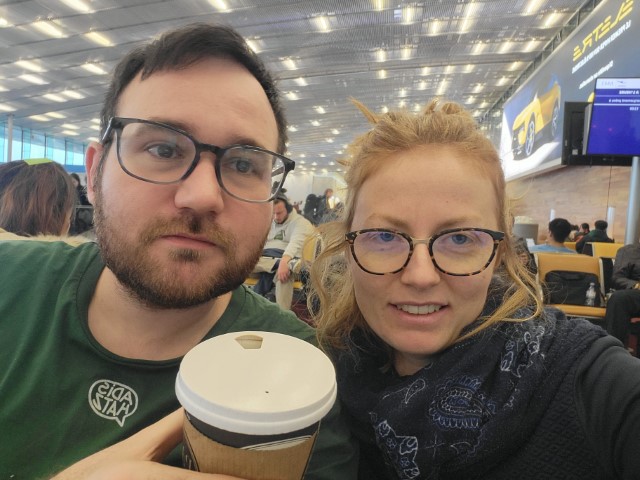
The CDG airport is quite crowded and it takes us 2 hours to check in, go through identity control, pass security checks, and reach our gate. We have 1 hour before the boarding begins, it let’s us time to enjoy our coffee.
The plane takes off with a good hour delay because the ice on the wings needs to be thawed. The process is impressive, we can see through the windows an orange liquid being spread over the entire aircraft (I’ll let you watch the video below which was made by AvJet / TSAS).
Despite this small setback, we arrive in Xiamen without any trouble. However, entering the airport takes a bit of time. The numerous checks required to enter Chinese territory take about 2 hours, and several people barely miss their connecting flights. The airport is small but quiet. We easily find seats and quickly fall asleep like logs.
We board our second flight without really feeling the wait. It takes us 2 hours and 30 minutes to reach Hanoi, which is enough time for the airline to provide us with a snack.
Once we arrive in Vietnam, we go through immigration. There are a lot of people, but fortunately, many counters are open, which helps to balance it out. It will take us 30 minutes to go through the checks. As often happens, the agents are not very talkative but don’t cause us any problems. We obtain the precious entry stamp with the expected exit date.
We retrieve our luggage that had been checked in and then we mentally prepare ourselves to face the surroundings of the airport and its taxis. As expected, we are approached by many, but most of them are not very insistent: a simple « no » is enough to get them to leave us alone. It’s acceptable. Only one or two are more insistent and slightly spoil our arrival.
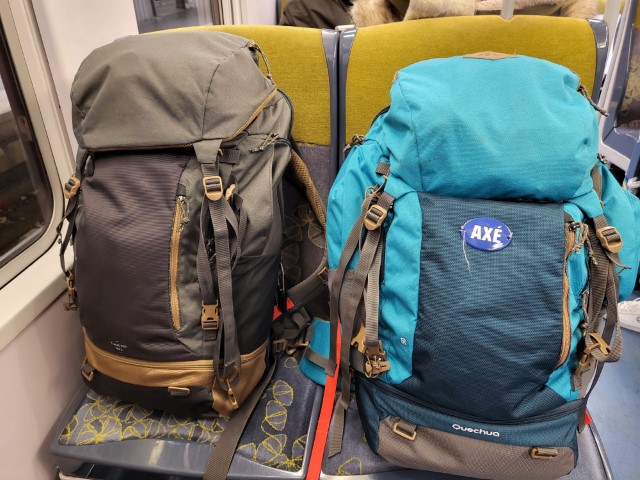
Despite the human tide that surrounds us, we manage to catch the bus that takes us to the city center for 50,000 VND (2€). The large bags are stacked in the middle of the bus, balancing precariously. Here, there’s no need for a ticket to board the bus: an agent collects the money and issues a ticket in exchange.
Eva’s mind doesn’t stop thinking as the journey progresses. As often happens, arriving in a new country is not simple. There is accumulated fatigue to deal with as well as jet lag. Also, the arrival is often in big cities that sometimes seem a little scary. The traffic here is intense, the honking is incessant, the streets are not particularly clean, and for the moment, we are crossing the suburbs with houses that are barely standing. In addition of this the small bag of a traveler have disappeared during the bus journey. The driver stops to help the traveler look for her belongings. He questions the remaining Vietnamese passengers, but the bag remains lost. We don’t know if there was a deliberate theft or if someone simply picked it up by mistake among the pile of bags. This second option wouldn’t surprise us given the chaos that was the pile of travel bags (take note if you plan this option).
We finally reach our stop, and what we feared happens: we have to cross the road! We quickly understand that here, it’s the law of the jungle: the bus has priority over cars, which have priority over scooters. At the bottom of the chain are bicycles and pedestrians. Traffic lights are sometimes used to organize traffic. But it’s better not to rely on them because they are rarely respected. Finally, we understand that the scooters know very well how to navigate around us and don’t cause us too much trouble. However, the cars and buses do not stop and do not yield. This sometimes leads to tricky situations. Despite all our fears, we arrive safely on the other side. To better illustrate what Vietnamese traffic looks like, you will find a video made by Let’s Speak Vietnamese.
We walk for about twenty minutes to reach our accommodation, and when we realize we are in a very small alley, we are reassured. It’s quiet here, and that’s all we need.
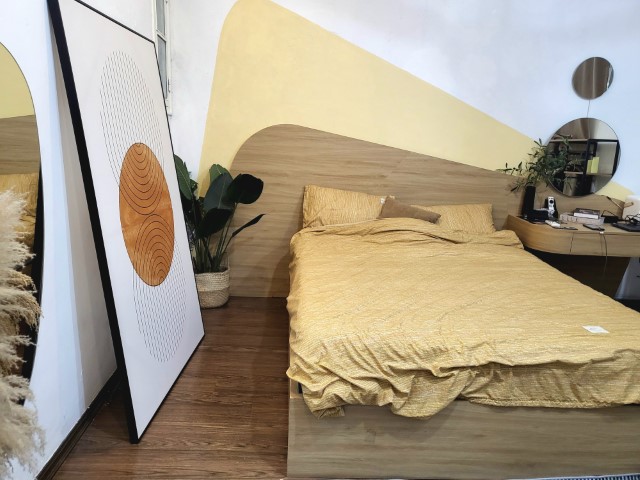
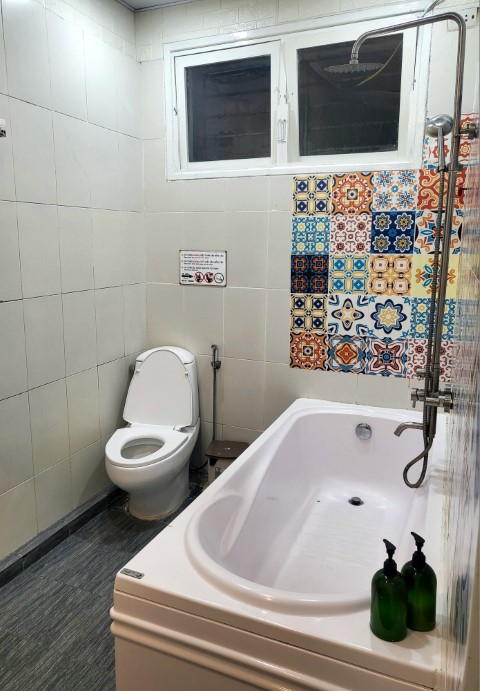
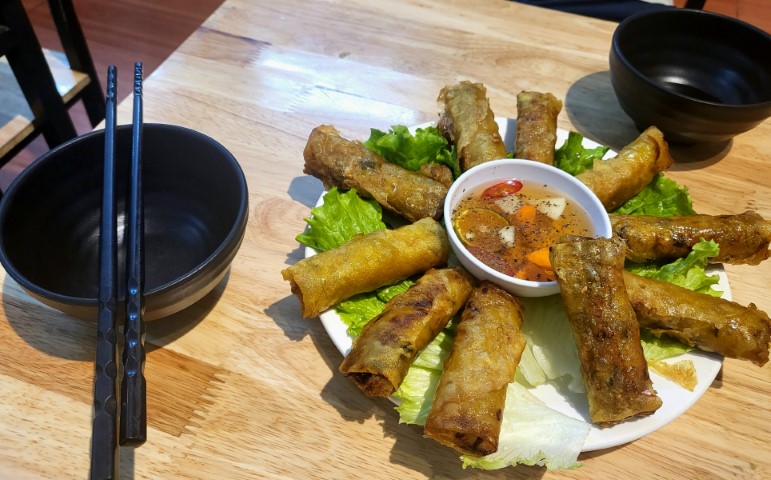
We drop off our big bags and then head into the town to find a meal for the evening. We are tired and opt for the easy way: we go to one of the restaurants found by Eva and that offers gluten-free options.

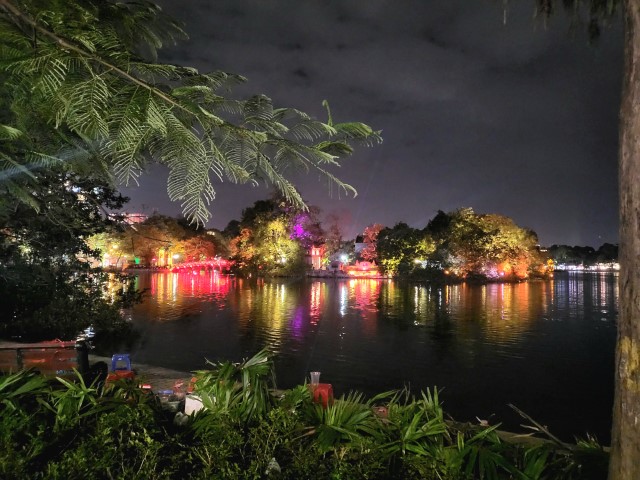
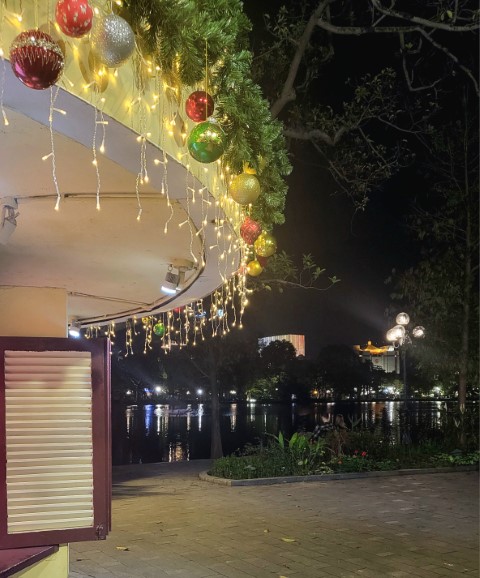
Then we extend the stroll and go to Hoan Kiem lake. Despite the traffic, we appreciate the surroundings of the lake, which are very well laid out with benches, beautiful string lights, and its small temple, such as Ngoc Son. Many Vietnamese people are present, dressed in their traditional attire, the Ao Dai, and taking pictures from every angle. There are ambulant vendors mainly selling food. They are not very insistent, and their presence does not bother us. This first little outing reassures us a bit, and we think that after a good night of sleep, we will see things differently.


Stroll through the old quarter, SIM card purchase and currency exchange
We are getting out of bed late. Jet lag prevented us from falling asleep at a reasonable hour, and we wake up around 10 a.m. By 11 a.m., we are ready to go out and full of energy to explore the country.
Eva read that Vietnam is a gluten-free paradise. She inquired to know which dishes she can eat safely and is motivated to taste them, especially at the street stands which usually offer the best and most affordable food.
We wander the streets to find stands that offer dishes Eva can eat. We finally find one. To make sure there is no gluten, Eva shows her explanatory card because here, like everywhere, recipes can be adapted. The person barely takes the time to read the card and tells us to leave… It’s a very cold and unequivocal contact. We leave with our tails between our legs but we don’t get discouraged. We find a second stand and go through the same procedure. We receive the same reaction… This time it really cools us down. Tomorrow, we will take a street food tour in Hanoi and take advantage of having a guide to try to understand these reactions.
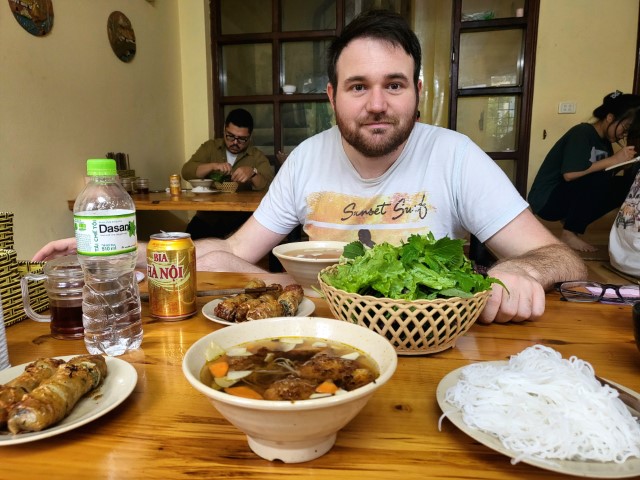
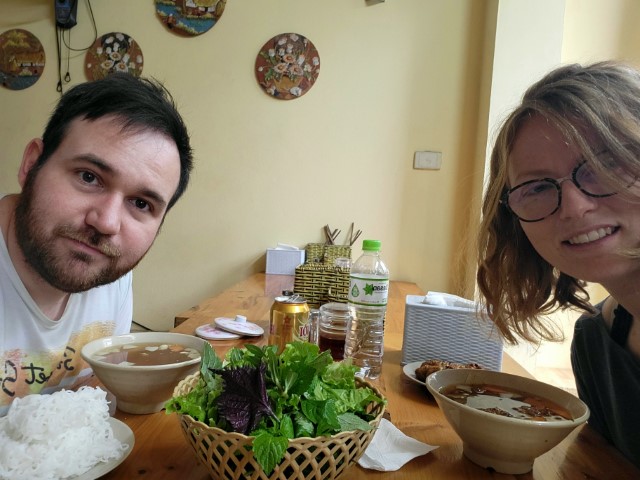
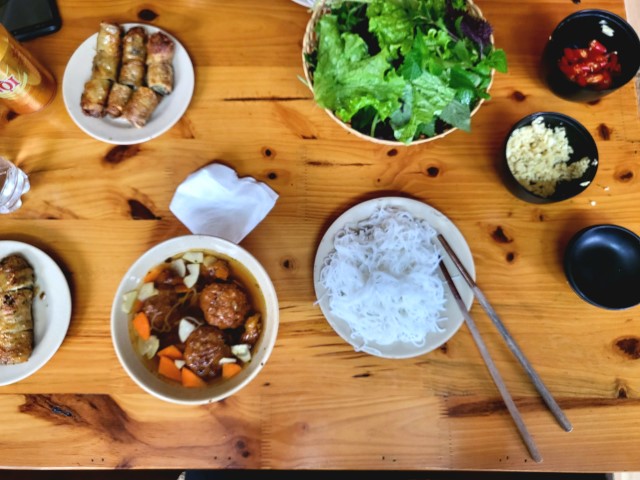
For now, we are going to another restaurant found by Eva, Bun Cha Ta. Here, we are well received. We are ushered into a room with tatami mats. We take off our shoes and sit around the table. The staff speaks English very well, which allows us to ask all our questions and have a real exchange. We are told that Bun Cha is a rice vermicelli soup with grilled barbecue pork seasoned with a broth with carrots and green papaya. It is served with greens (salad and herbs), and spring rolls can also be added. We choose the most complete option and devour our plate.
SIM card
We then head to a Viettel store to get a local SIM card and a data plan. We find a store quite easily, and the staff speaks very good English. They show us a summary of the prepaid plans they offer. The cheapest one is 25€ and offers 150GB for 1 month. It’s very expensive for the country, so we ask if they have anything cheaper. They say no. So, we decide to leave the store and find another one. The second store is better and offers a plan of 1GB/day for 1 month at 140,000VND/person (about 4.50€), which is quite reasonable.
We spend a good hour in the store because to finalize the procedure they need to take a photo of our passports. The problem is that they are too reflective and they can’t take a proper picture. This ends with a video call with the customer service during which they seemed to be taking picture of us. We’re not sure, but we leave with a SIM card and a plan!
Money exchange
We continue the « arrival in the country » day by going to a jewelry store to exchange the euros we brought with us. We are offered 26,750 VND for 1 euro, which is better than the current rate and is due to the fact that the jewelry store is linked to the price of gold. We exchange 400€ and leave with 10,000,000 VND, which makes a nice little bundle. We return to our accommodation to deposit some of it.
A walk in the Old Quarter
With the formalities completed, we take some time to stroll through the streets of the old quarter. The atmosphere is hard to describe. The city is very intimidating with its numerous motorized vehicles that completely ignore us, honking at us, and the street vendors at every corner. The indifference of the Vietnamese towards us also makes us feel good: we do not feel unsafe and do not feel like our presence attracts pickpockets despite what we had read before leaving. The odors also confuse us: the smells of expired food is mixed to the aromas of food being finely prepared. The sidewalks are also quite inhospitable: they are full of scooters, trash, street food tables, and stalls. Clearly, pedestrians have little room to move around in Hanoi.
Without realizing it, we soon find ourselves in tiny alleys winding along the buildings, completely cutting us off from the city.
Further on, we come across Saint Joseph’s Cathedral, built during the French colonization and supposed to be a miniature of Notre-Dame. The religious buildings, as well other colonial buildings, are generally well preserved. The miniaturized statue of liberty cannot say the same and was dismantled by the locals.
The city is a maze that we enjoy exploring!

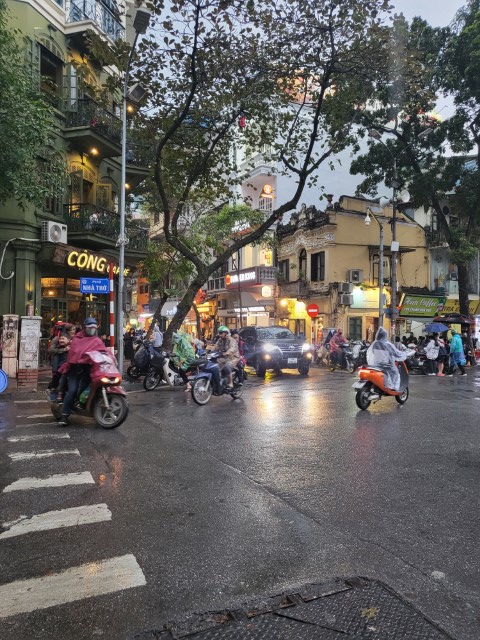
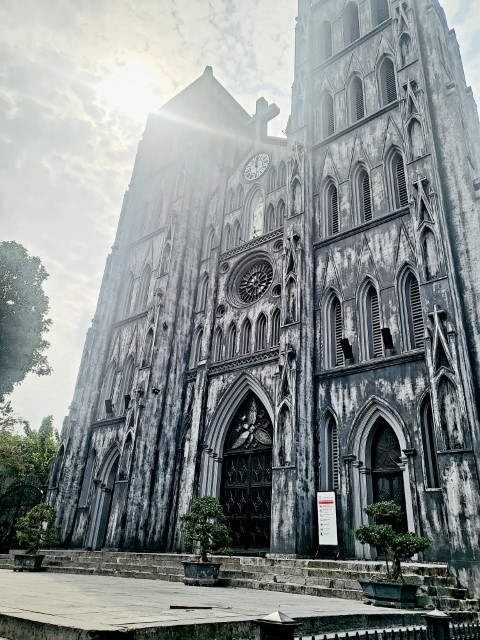
The day is already well advanced and we are heading back to our accommodation. We don’t have proper meals and we are saving ourselves for the street food tour that awaits us the next day.
Street food tour, Hoa Lo prison and shopping at BRMG
We wake up late again and despite the accumulated fatigue, we cannot manage to fall asleep in the evenings. We always struggle with jet lag when we travel eastward. We will have to be patient and time should helps us regulating our sleep and our digestive system.
Street food tour
We don’t take the time to have breakfast and head directly to the meeting point for our street food tour. We meet our guide around 11 am. Two Dutch women join us for the day. During the tour, we taste a total of 5 dishes, a pomegranate juice, and the famous egg coffee. There’s not a single dish that we don’t enjoy, and everything is a wonderful discovery! Especially the egg coffee, for which we had heard negative feedback from tourists. In our opinion, it tastes like a very good tiramisu. It’s worth noting that not all egg coffees are the same, and the Cafe Giảng is said to have the original recipe, the one that would be born during a period of milk scarcity in Vietnam.
If you’re interested in learning more about the composition of the dishes, you can take a look at my article on gluten-free options in Vietnam, where I detail the composition of many dishes.
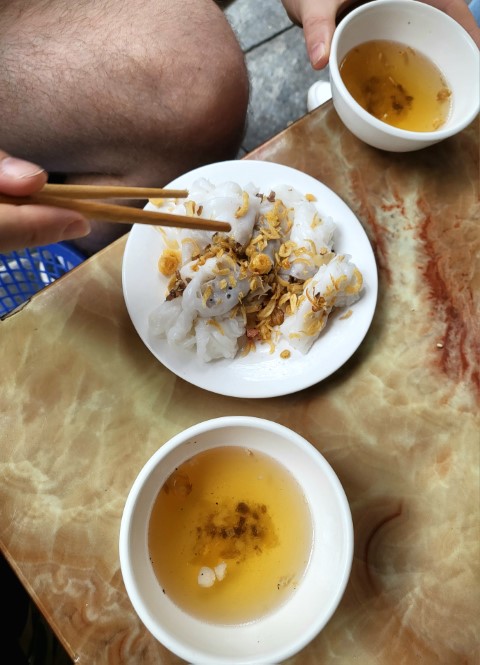
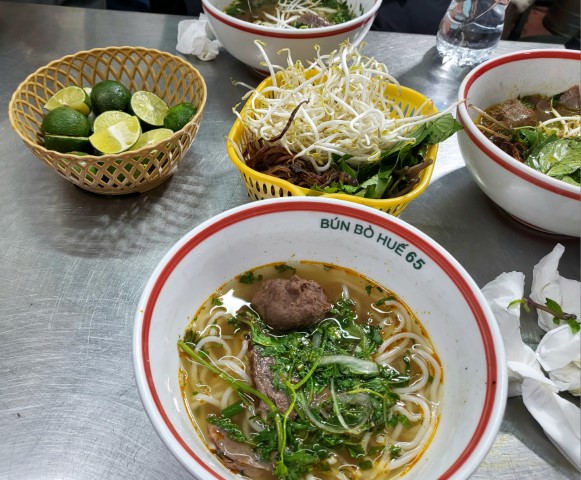

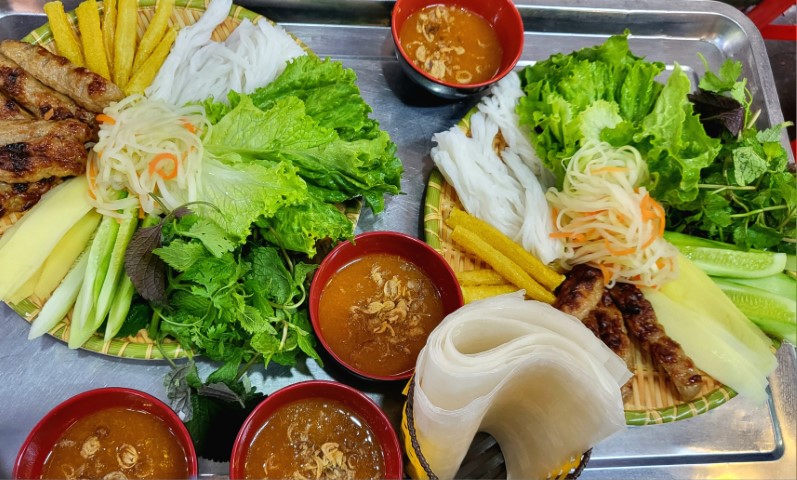
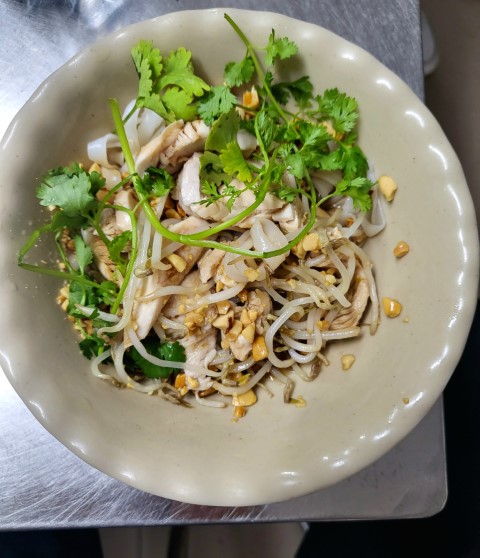
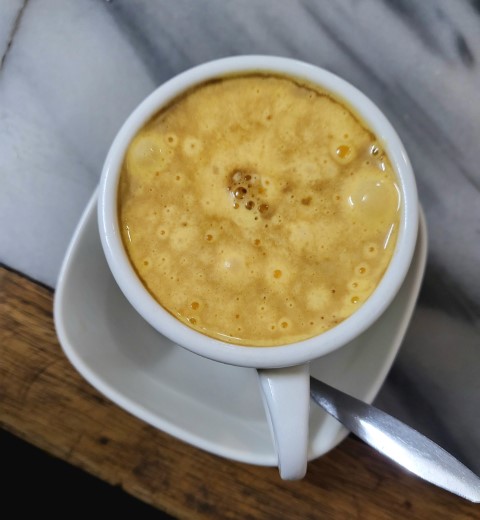
During the visit, we pass through very narrow streets, and our guide will give us the chance to go ahead. Why, you may ask? Simply because rats have taken up residence in the city and they are not to our guide’s liking. He prefers to let the French pass because he associates Paris with the movie Ratatouille. For him, we are used to rats. Our reputation is not getting any better…
With that said, the tour was very enriching and the guide doesn’t hesitate to provide us with numerous explanations.
From a practical point of view, we learn to cross the street like real Vietnamese people, which will be very useful for us in the future! The guide tells us that we need to be fabulous, implying that we need to have self-confidence when crossing, as tragedies happen when we hesitate.
We also learn to clean our chopsticks like real Vietnamese, by rubbing a slice of lemon on them.
And most importantly, we learn more about the context of street food. The stalls have very minimalist furnishings to welcome you. We thought this was simply because the Vietnamese are content with little and also because it’s easy to store. Apparently, the reason is also so that you don’t feel comfortable there. Time is money, and they hope that in 10 minutes, customers will have been served, eaten, and paid, and this is especially noticeable during peak hours. We are starting to understand why we were poorly received the day before. We thought that the language barrier was the reason, but in reality, their attitude is exactly the same towards the Vietnamese. Our guide has been turned away several times at the street stalls: once when he asked for meatballs, the person told him that he was in the wrong place for that and that he would be better off going to the supermarket; another time, he was asked if he was blind because he was taking too much time to decide on his order. You shouldn’t take offense when visiting Hanoi’s street stalls!
Later on, when we asked him what the dishes contain, he tells us that he doesn’t know. The recipes of the street stalls are kept secrets, and are only passed down from generation to generation. Eva immediately understands that eating at the street stalls will not be easy.
Finally, he asks us if we think people who does street food makes a good living. By observing them, it seems that they don’t. They are modestly dressed, and the chairs and tables provided are very simple… He tells us that we shouldn’t judge by appearances here. The manager, who we thought was quite destitute, drives a BMW, and the best of the street food vendors makes 2000€ to 4000€ per day on weekends.
He also talks to us, completely unrelated to street food, about the difficulty of accessing property in Hanoi. In the old quarter, the most expensive area, a 25m² apartment sells for several million euros. Rental prices are equally high. So, children are forced to continue living with their parents.
Hoa Lo prison
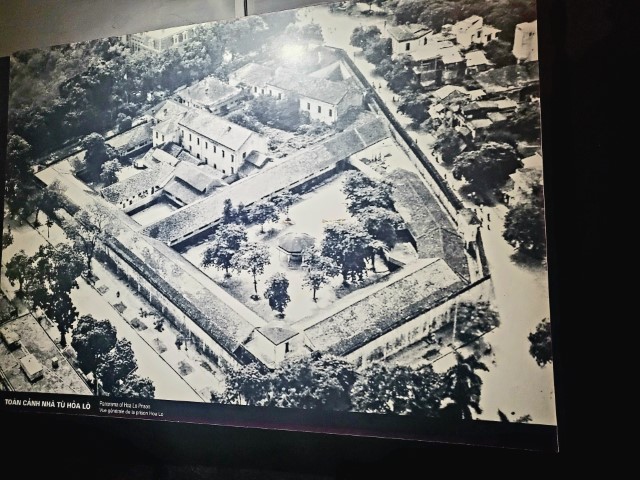
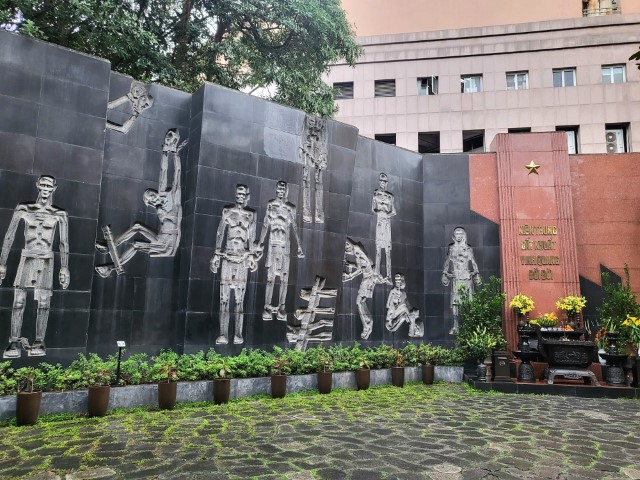
The day continues with a visit to Hoa Lo Prison. This building dates back to the colonial period, during which numerous political prisoners were confined within its walls. The prison was notorious for its extremely harsh treatment of its inmates. An enduring symbol of this brutality is the guillotine which was used for executing prisoners.
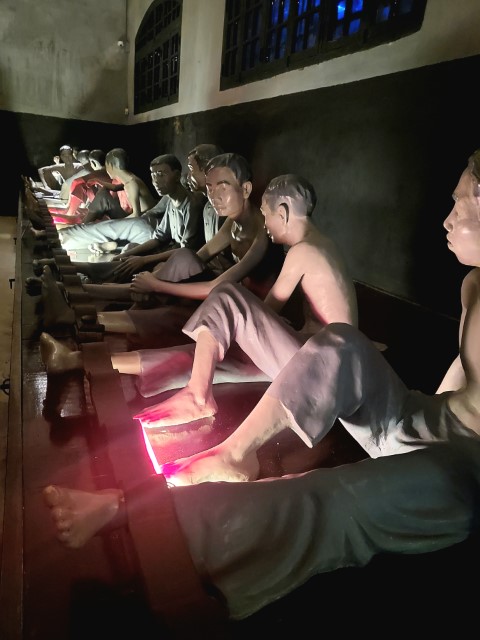
Photographs also depict the torture inflicted on the prisoners. They were shackled by their feet, unable to stand, leading to severe circulation problems.
Today, the site invites visitors to reflect on these difficult moments, as well as the resilience shown by the prisoners in maintaining their spirits under such circumstances, which allowed some to make their escape.
The latter part of the site narrates the lives of American pilots who were imprisoned there.
While everything is well described, we found that there was sometimes a lack of context for a complete understanding of the story. This comprehensive perspective is likely provided by a guide. We opted for an audio guide, which was quite valuable in itself.

Supermarket stop
The day ends by doing some shopping. It is important to know that here everyone eats out (including locals), so grocery stores/supermarkets are not common. The ones we have seen so far are tiny. We spotted a larger one, called BRMG, and we are very surprised by what we find inside. It mainly consists in imported products. We find numerous French products, especially in the fresh food section, including yogurts, cheeses, and other dairy products. Prices are high for the country and are roughly equivalent to what we would find in France. We also look for gluten-free products for Eva. Unfortunately, we do not find any certified gluten-free products. Kévin, on the other hand, finds snacks for just a few cents! And so we end the day, our stomachs still full from the street food tasted earlier.
A walk around the lake at the west: in-between history and shopping zone
For this 4th day, we plan to explore the northwest of Hanoi and, as we are brave (or rather foolish), we venture there on foot.
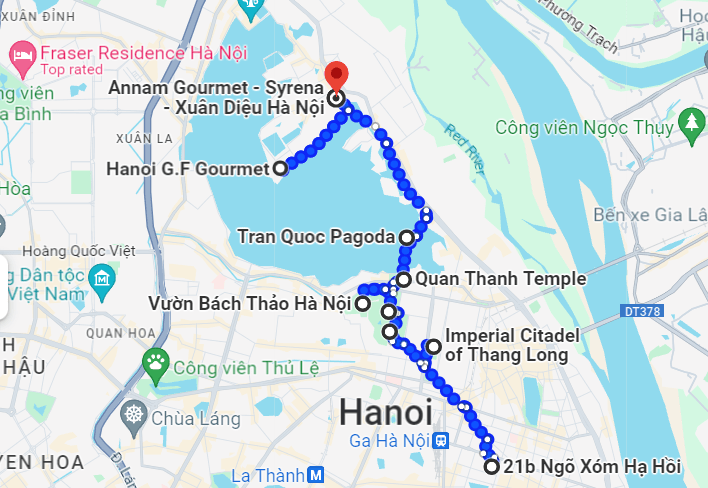
Imperial city
We are visiting the imperial city. The entrance costs only about 2.70€. Preparations for the Tet festival have begun. We also find dancers preparing the choreography to celebrate the lunar new year.
We pass through numerous buildings and become aware of the grandeur of the place: the buildings, the gardens, the courtyards… extend over nearly 18 hectares. Built in the 11th century, it was the regional political power center for 13 centuries in an almost continuous manner. In 1967, a bunker was dug to accommodate the Vietnamese army.
Despite the different wars the buildings have experienced, the places remain relatively well preserved thanks to restoration work.
Quite astonishing fact: the citadel only opened its doors to the public in 2004.

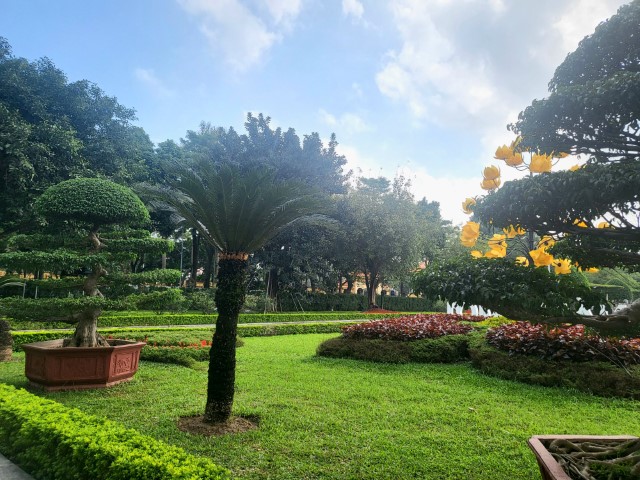


Mausoleum of Ho Chi Minh
We continue with the mausoleum of Ho Chi Minh.
To visit this place, the rules are strict. Make sure to dress appropriately with your shoulders and knees covered, otherwise you will not be allowed to enter.
This mausoleum was built to house the remains of Ho Chi Minh, the founder of the Democratic Republic of Vietnam, who died on September 2, 1969.
The construction of the building is inspired by the building housing Lenin and the work began in 1973, with Ho Chi Minh’s body being kept in another building until the completion of this construction.
We were unable to verify as we arrived too late, but the body of Ho Chi Minh is said to be preserved in the cold, under a glass sarcophagus illuminated by dim lights. The body is said to have been meticulously embalmed, with close associates of Ho Chi Minh enlisting the help of the Soviet allies to proceed in the same way as Lenin’s body. This is said to have been done against Ho Chi Minh’s will, as he reportedly wrote in his will « No tombstone or bronze statue », but rather a simple ceramic urn. The body has been guarded 24/7 for decades. The monument is normally open to the public every day from 9am to noon. However, visitors are prohibited from taking photos or videos inside the mausoleum.

Next to the mausoleum, there is a museum in honor of Ho Chi Minh that we did not visit.
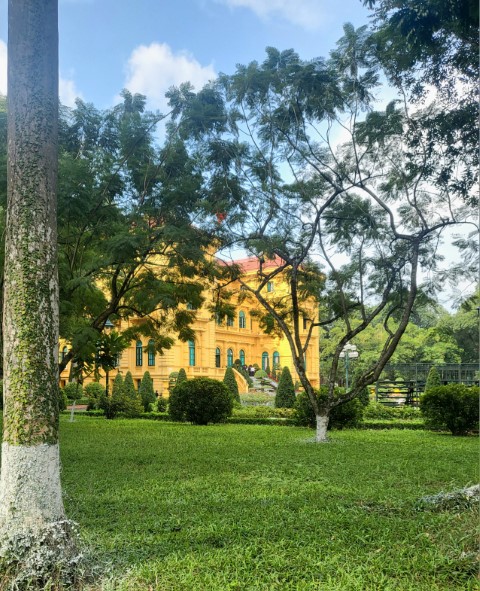
The presidential palace
A little further on, the presidential palace is located, a building recognizable by its yellow color indicating that it is a structure dating back to the colonial era. At the time, the building was occupied by the governor of French Indochina.
Ho Chi Minh should have occupied the premises, but he refused because he found it inconceivable to live in such a luxurious building while the citizens of his country were poor and hungry. Instead, he decided to live in a small house in the garden, House No. 54, and the presidential palace was used to host important delegations.
These days, the presidential palace mainly serves to host foreign political representatives during their visit to Vietnam. During our visit, many people were indeed shaking hands at the entrance of the palace.
Ho Tay lake
We continue our journey further and further north to reach lake Ho Tay.
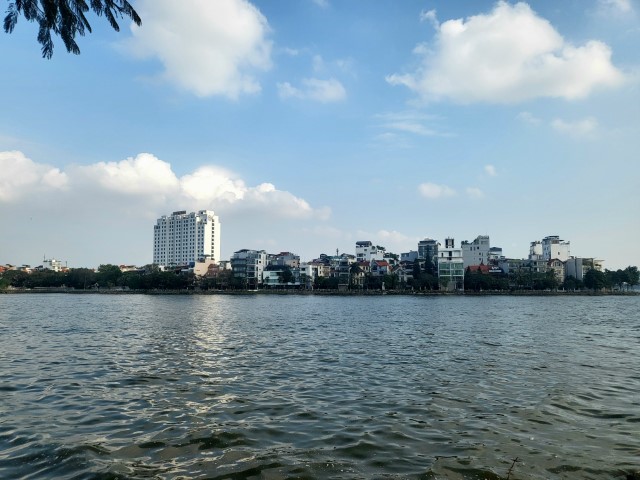
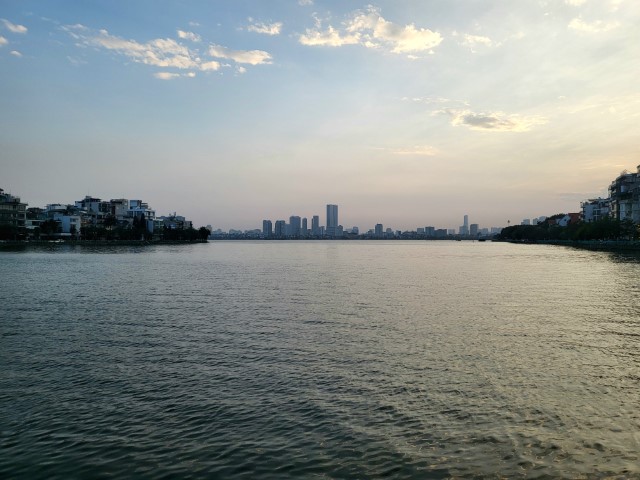
Until the Trấn Quốc Pagoda, the oldest pagoda in Hanoi built in the 6th century, the walk remains pleasant.

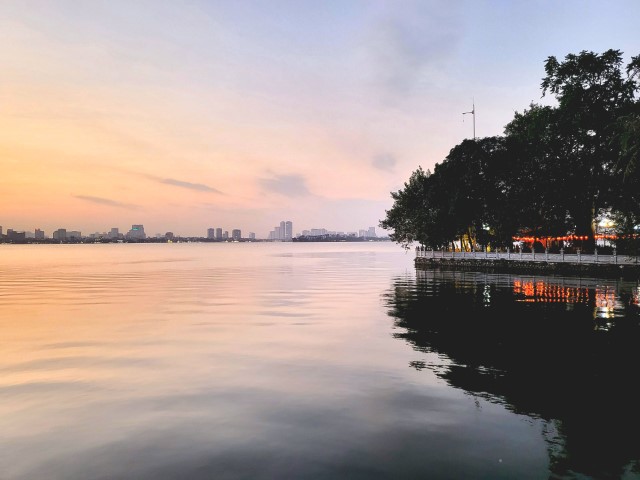
We decide to continue our way around the lake to reach a restaurant and a grocery store offering gluten-free products.
But we quickly regret it. To reach the establishments, we have to leave the surroundings of the lake and find ourselves on a road with insane traffic. Motorbikes brush past us, cut telephone cables fall on our faces. Once back on the sidewalk, it is under construction and hardly passable.
We reach our destinations but with 20 points of hearing lost.
Many construction works are taking place in the area, hopefully to improve everyone’s traffic. Many luxurious establishments, such as hotels and restaurants, are also being built. It is possible that the arrival of tourists in the area will help develop infrastructures.
We have finished our shopping, and twilight is starting to fall. We are considering taking a bus to cover the 6-7 kilometers that separate us from our accommodation. The heavy traffic convinces us to make our own way back and we start walking.
Long Bien bridge and an evening without motorised vehicles !
For this last day in Hanoi, we plan to take it easy, or at least more than the day before. The plan is to go to the Long Bien Bridge and cross it to the Red River.
The reality is a bit different and access to the bridge is not as straightforward as we thought. Google Maps is of immeasurable help, but it often leads us into dead ends in Vietnam. The narrow streets it directs us to are often blocked by houses or other buildings, which is indicative of the rapid construction in the country.
We find ourselves on the outskirts of the city, in a more impoverished area than what we had seen so far, and the road gives way to a dirt path. We see Tuk-Tuk drivers repairing their work vehicles or repainting them. We also see men playing a kind of foot badminton and are astounded by their dexterity. We also spot a street-food stand much more modest than the ones we see in the center of Hanoi. Contrary to what one might think, whenever we find ourselves in poorer areas, we encounter grounds littered with plastics, as the population may not necessarily be educated on the importance of disposing of these in trash bins.
After traversing a makeshift market area and a road from which we never thought we would emerge alive, we finally reach the bridge.
A small sidewalk was designed for pedestrians but sensitive souls should abstain, the slabs tremble as vehicles pass and are pierced, revealing the space beneath our feet. Kévin battles his fear of heights and it’s worth it. On the side, we observe an impressive agricultural area with numerous banana trees. Then we arrive at the banks of the red river, whose diameter is striking.
It’s important to know that the Long Bien Bridge was designed in the Eiffel style. It was the first steel bridge to cross the river. It measures 1682m long and was a prime target during the various wars that the country has endured. Despite this, it has managed to withstand numerous attacks. Today, other bridges have been built to cross the river. However, this bridge is still used for cars, scooters, and even trains to cross.
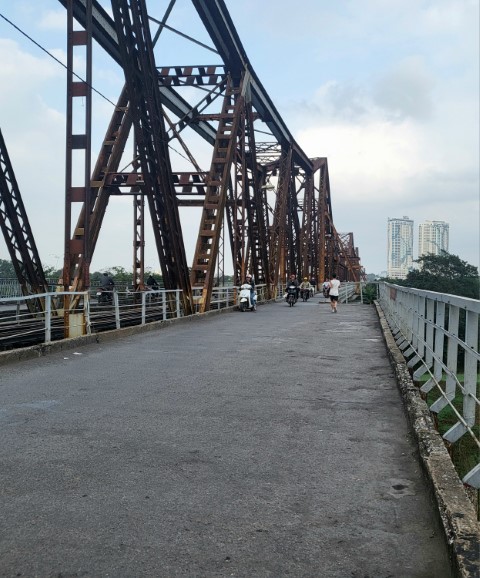
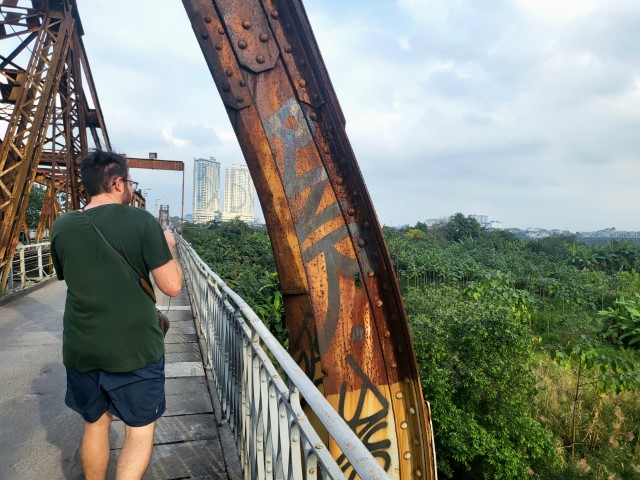
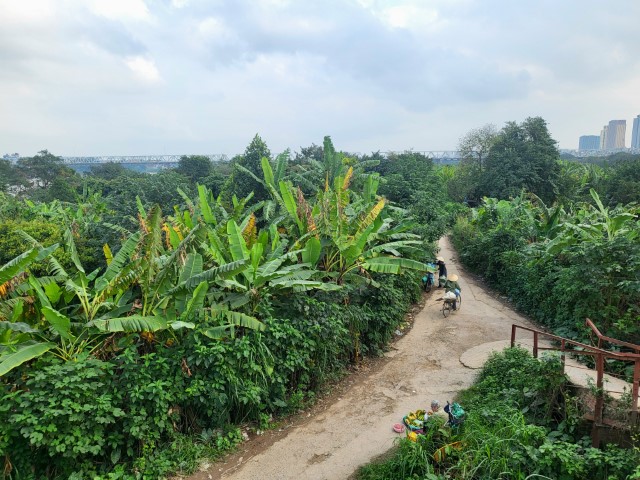
On the way back, we stop at one of the many Mixué stores, a famous brand in Vietnam. Eva orders a bubble tea, or should I say pearl tea as they call it here, for a modest sum of 25 000 VND (around 1€).
We wind our way along the streets, watching the Tết decorations gradually take over the stalls.
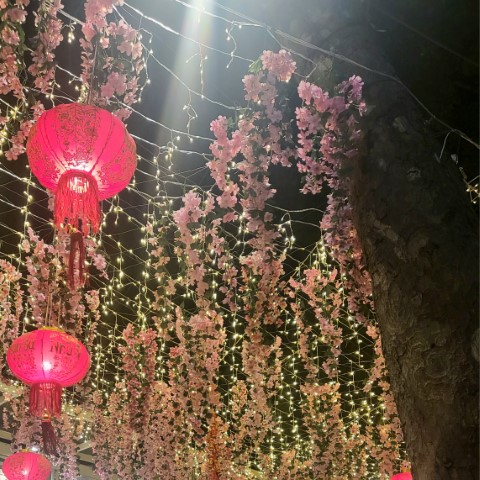
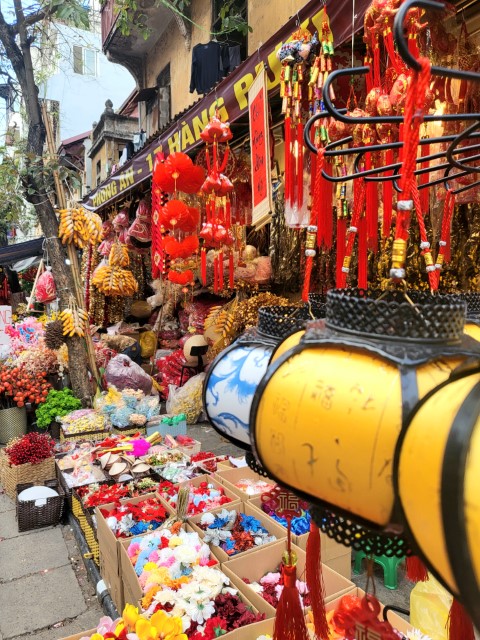
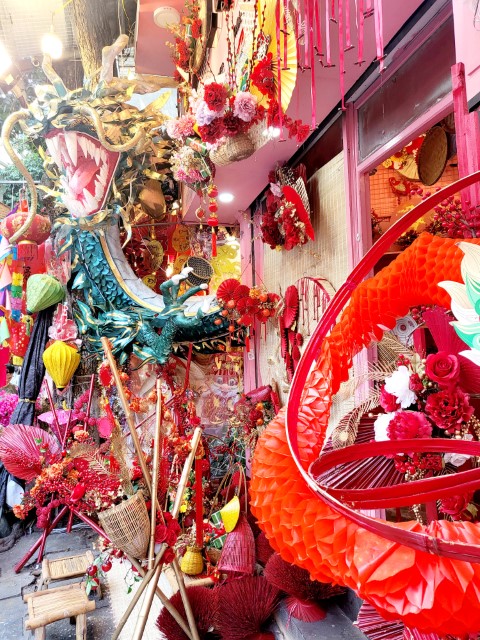
Then we are looking to set up upstairs in a café to observe and film the traffic around Hoan Kiem Lake. It’s at this moment that we realize that the traffic has been blocked. We will find out that actually this happens every weekend (from Friday evening to Sunday evening). We have to change our plans but with a hint of pleasure: being able to move around without constantly worrying about motorcycles and cars provides a whole new experience of the place! The fact that there is no more honking also allows us to enjoy it more, and our ears thank us.
We end the day with a typical Vietnamese snack. Eva has heard about Banh Trang (literally rice paper) which is supposed to be always gluten-free. We settle at a street stall that offers them, but 3 versions are available: Bánh Tráng Nuóng (grilled rice paper), Bánh Tráng Cuôn (rolled rice paper), and Bánh Tráng Trộn (cut rice paper). Even with the help of our translators, we’re still in the dark. We try to exchange a few words in English but we can’t seem to make ourselves understood. We also know that in Hanoi’s street stalls, we shouldn’t linger, so we order all 3! The Banh Trang Nuong wins praises from Eva and Kevin. Kevin barely touches the Banh Trang Tron, and it’s true that a quite pronounced taste comes out of it. It’s highly likely that dried octopus was part of the dish, but shut, Kevin dares, and we don’t want to disgust him!

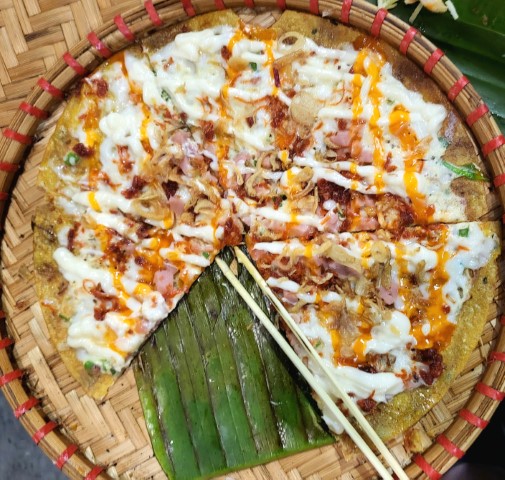
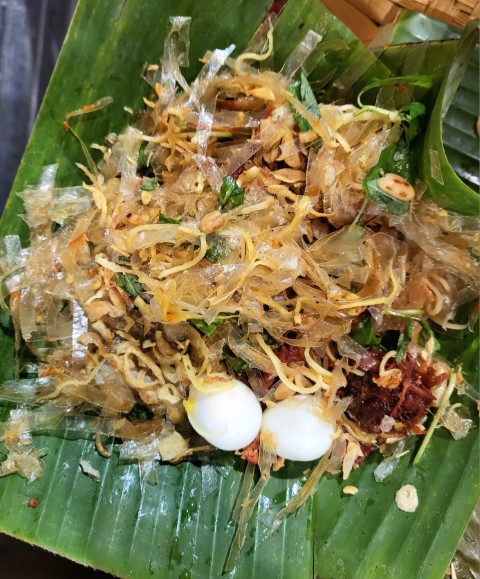
This is how we end our last evening in Hanoi. We didn’t see the stay go by and we are preparing our bags for… Sa Pa (to be continued).
In a nutshell
Our opinion on Hanoï in January
Despite generally cold weather at this time, we were lucky to have very mild temperatures (around 25°C), with sometimes a warm sensation due to the humidity. We don’t know what the capital looks like in peak season, but in January, the number of tourists was quite reasonable and it was greatly appreciated: the streets were already crowded enough with scooters, abandoned objects, and trash.
Despite its unattractive appearance and incessant honking, the capital holds a lot of charm and retains many traces of the past. Depending on the neighborhoods, the atmospheres can change completely. Most of the time, you won’t even need to change neighborhoods to go from a barely standing house to a luxury establishment.
Hanoi also won us over with its cuisine. We knew that the city was renowned for it, but as it was our first city, we had no point of comparison and did not know how to fully enjoy it.
Don’t be surprised if the contact with street food vendors is cold. They rely on regular customers to bring them money and don’t need tourists to make a living, so they won’t handle you with kid gloves, just like the Vietnamese in general.
When going on a street food tour in Hanoi, you won’t be disappointed. However, be sure to book a knowledgeable guide.
In terms of duration, we stayed there for 5 days because we had the time, but your duration in the city can easily be shortened. Nevertheless, take several days to fully appreciate the beauty of the city.
During the weekend, the surroundings of Hoan Kiem Lake are closed to traffic and very pleasant. The Vietnamese and their children play right in the middle of the street.
The downside of the city is therefore its traffic and the highly polluted air that results from it. Asthmatics, get your inhalers ready. The traffic is not getting any better. More and more cars are appearing, and it will become very difficult and unpleasant to walk the streets of Hanoi if nothing is done.
From a practical point of view
To get out from the airport
A bus joins airport to the city center: line 86, 50 000 VND/pers
Avoid at the maximum to take a taxi. You can still order a Grab (more or less the equivalent to Uber in Asia), it can be a good compromise.
Money exchange
Adress of the jewelry where we have exchanged our euros (other currencies are also accepted): Google maps link
Visits
*Street food tour in English:
Tripadvisor link
22.50€ per person this includes tasting 5 dishes, 1 drink and 1 dessert. 1 bottle of water for the day will also be provided.
*Hoa Lo prison:
Google maps link
Entry ticket at 50,000 VND / pers (2€)
Audio-guide at 100,000 VND / pers (4€)
*Imperial city:
Google maps link
Entrance at 70,000 VND / pers (2.70€)
Accommodation
When booking your accommodation, be cautious about noise. The city is very noisy and it’s easy to end up in a place where you won’t be able to get a wink of sleep at night.
The accommodation where we stayed was peaceful: https://air.tl/fU36ura8 for a price of 21€/night. It’s worth noting that it’s entirely possible to find cheaper accommodations, especially in dormitories with prices ranging from 7€-10€ per night.
Food
The price for a dish is between 30,000 and 50,000 VND at a street food stall
In a restaurant, prices will be higher, around 60,000 – 80,000 VND for a Vietnamese dish and intermediate restaurant.
Points to consider
Your worst enemies in Hanoi will be scooters and cars. Do not rely on traffic lights: no one respects them. Crossing the street becomes an art. Walk at a steady pace so scooters can weave around you. When it comes to larger vehicles (cars, buses), stop because they won’t.
We do not mention the risks of scams because we have not experienced any, but remain reasonably vigilant.
Our 4 last articles on Vietnam
The budget for a trip to Vietnam
How much does a trip to Vietnam cost? Here we tell you about local prices. We comment on our budget without taboos nor omissions.
COMMENTAIRES
 Le goût du monde sans gluten
Laisser un commentaire