
|
At Nahoko’s to learn how to cook Japanese and gluten-free dishes
Published
on
Last
modified
on


We love to learn how to cook locally, and learning to cook Japanese was almost a dream. So once we were in Japan, we quickly set out to find cooking classes… gluten-free! The catch is that the gluten-free diet is still very little known in Japan, and this often presents a challenge (we discuss it in more detail in this article). When starting our searches we were not confident, but fortunately for us, our efforts led us to a wonderful surprise.
This site contains no affiliate links, allowing us to share our experience with complete transparency.
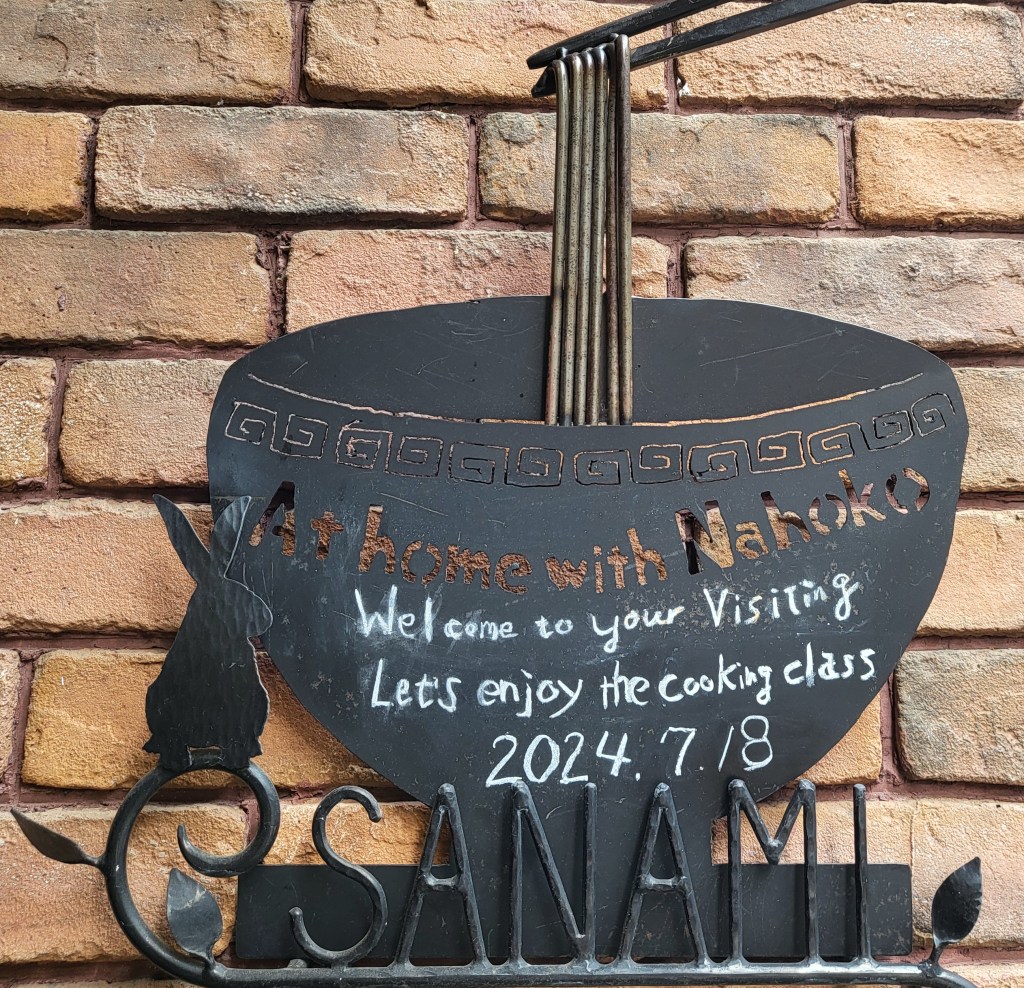
At home with Nahoko
During all our travels, we try as much as possible to experience a cooking class with a local. It’s an opportunity to dive deeper into the culture of the country, but it’s also sometimes the only way for Eva to taste certain typical dishes.
Learning to cook sushi or even mochi is popular when visiting Japan. The options are plentiful and compatible with a gluten-free diet. Among others, Comeconoco Laboratory, a café-restaurant based in Osaka and 100% gluten-free, offers various courses: from pastries to complete gluten-free menus at affordable prices. Their website and Instagram primarily emphasize pastries, but do not hesitate to contact Chef Yukiko to customize your request.
However, Kévin’s aversion to fish and rice leads us with even more restricted possibilities. We finally came across very positive reviews regarding the cooking classes offered by Nahoko on the Facebook group Gluten Free in Japan!
A quick visit to Nahoko’s website confirms that she indeed offers ramen cooking classes with a gluten-free option. But, and there is indeed a but, the prices are high enough fos us to deliberate for several weeks before making a decision. The cost is 18,900¥ for the gluten-free version (approximately $116 at the time) and 12,900¥ for the classic version (around $84).
It is Kévin who helps us take the plunge. The fact that we do not find any other gluten-free solutions also helps us making this choice. We register via the form found on Nahoko’s website, and a few hours later we receive an email from her proposing a date and time along with a PayPal link to proceed with the payment.
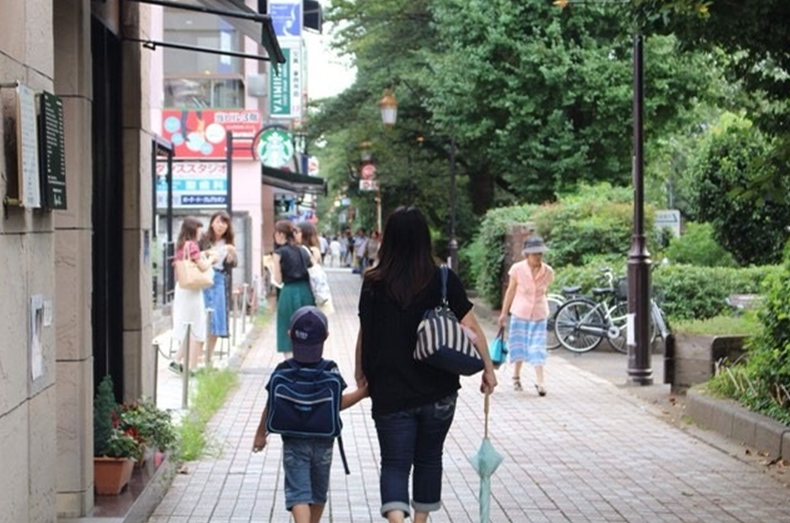
The evening before the course, Nahoko sends us a message with very precise and clear instructions on how to reach her home located in Kunitachi, a city in the Tokyo metropolitan area. Expect about thirty minutes to reach the city from Shinjuku station. For your information, we communicated in English with Nahoko, but we learned during the course that she has been studying French for several years. She already has a very good level and hopes one day to conduct the entirety of her course in French.
She also sends us a set of rules that we must adhere to during the course. The length and the number of rules plunge us directly into the experience, and we understand that the moment will be authentic and fully rooted in Japanese culture. The second rule gives Kevin a few cold sweats. It mentions that she can also adapt to allergies other than gluten if that is mentioned in advance. However, no ingredient will be removed just for personal preferences and tastes. Kevin, with his aversion to seafood, is convinced that the recipe will include fish. Despite Eva’s efforts to reassure him, Kevin regrets having decided to be part of the adventure, and he is apprehensive! Fortunately, this email reaches us only 24 hours before D-day!
It is 3:15 PM and here we are in front of Nahoko’s place. We had a good journey and found her house without any difficulty. We arrived a bit early, so we stopped at a family mart to grab a small coffee. Unlike downtown Tokyo, it’s not difficult here to find a bench to sit on and enjoy some shade. Although attached to the Tokyo metropolis, this city allows you to get away from the hustle and bustle of the center. You can enjoy your journey on the Chūō Line by stopping at Nakano Broadway, a shopping center known for its specialty shops in anime and related products. The stop after Kunitachi, Tachikawa, is known for its park, Shōwa Memorial Park, the largest park in the capital. In short, there is plenty to do around here, and you can fully enjoy the trip.
Let’s cook delicious gluten-free ramen
Nahoko warmly welcomes us and informs us that the class has turned into a private lesson: the couple who was supposed to join us couldn’t make it after all. This is a great opportunity for us to ask all our questions.
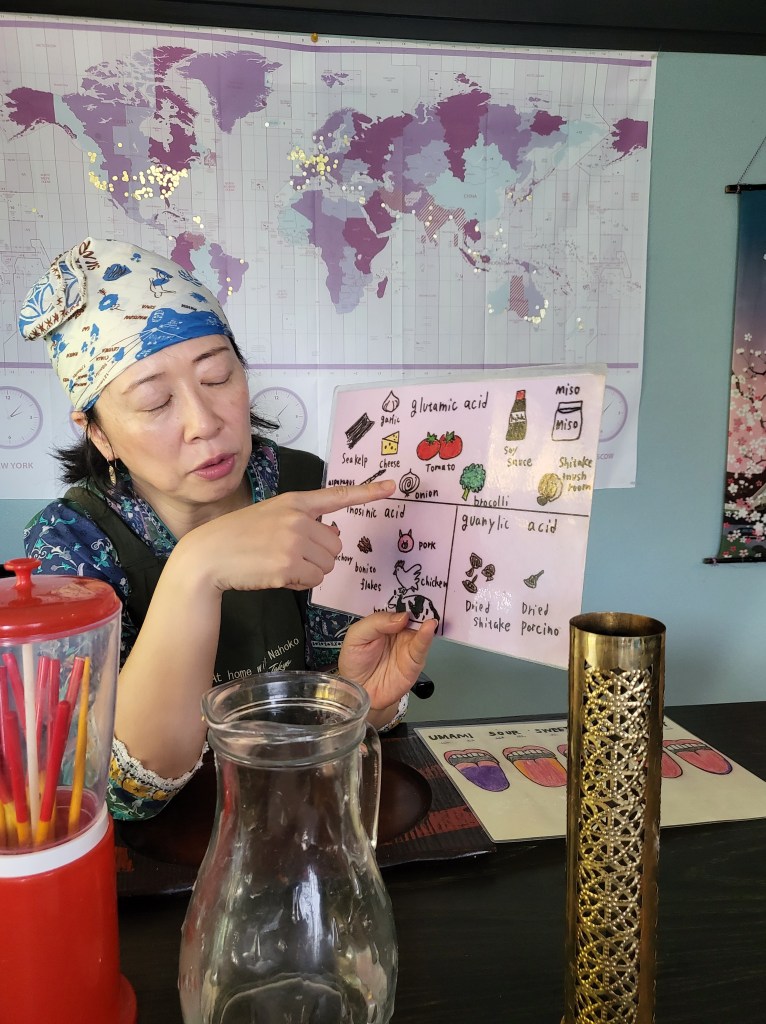
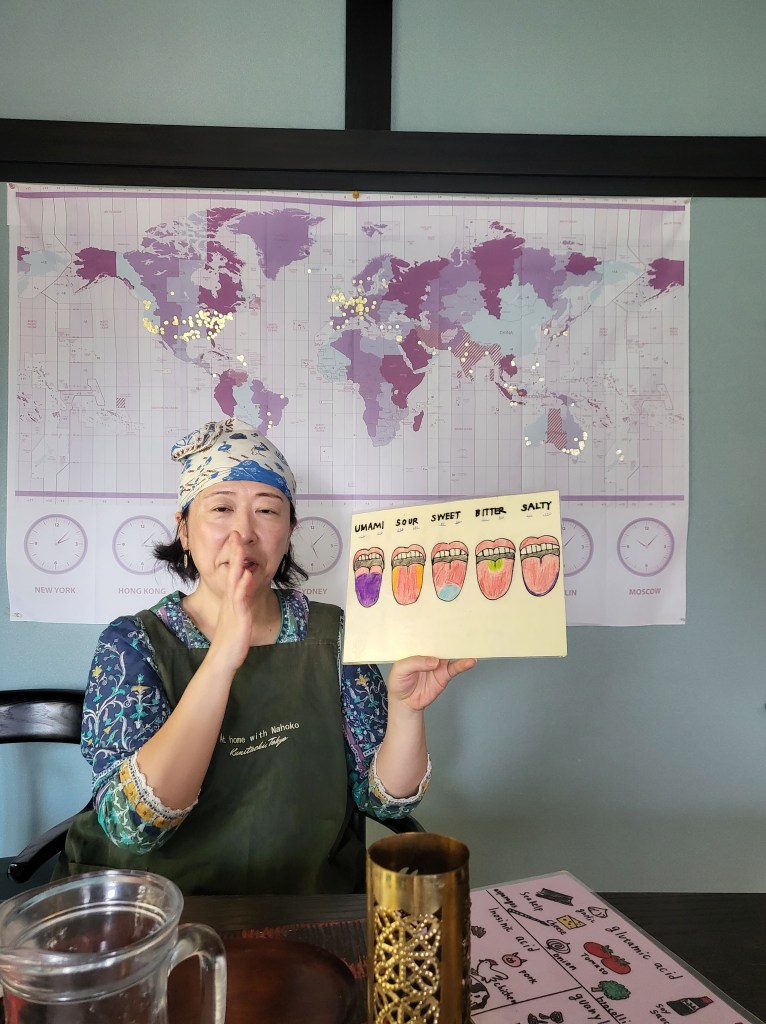
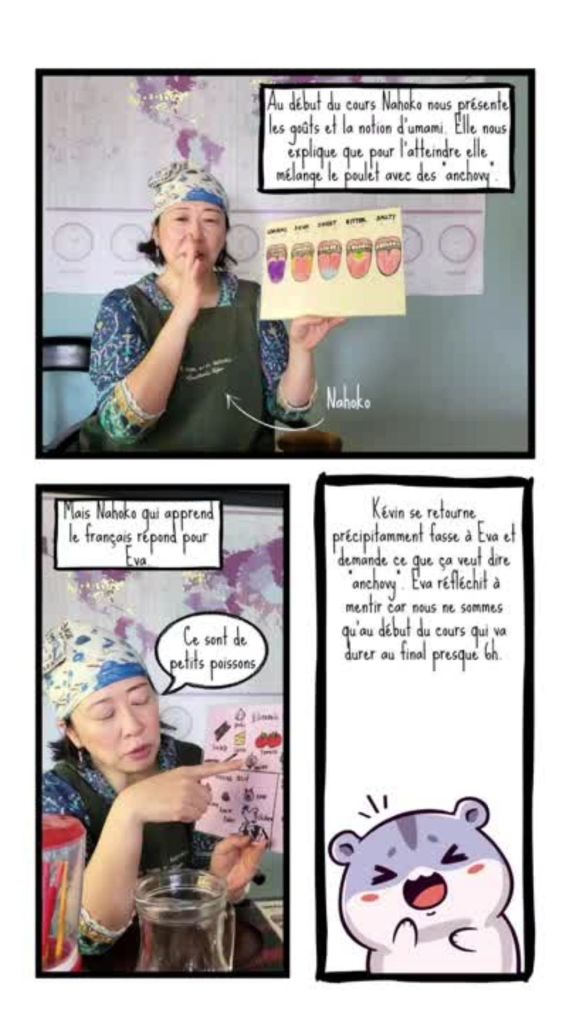
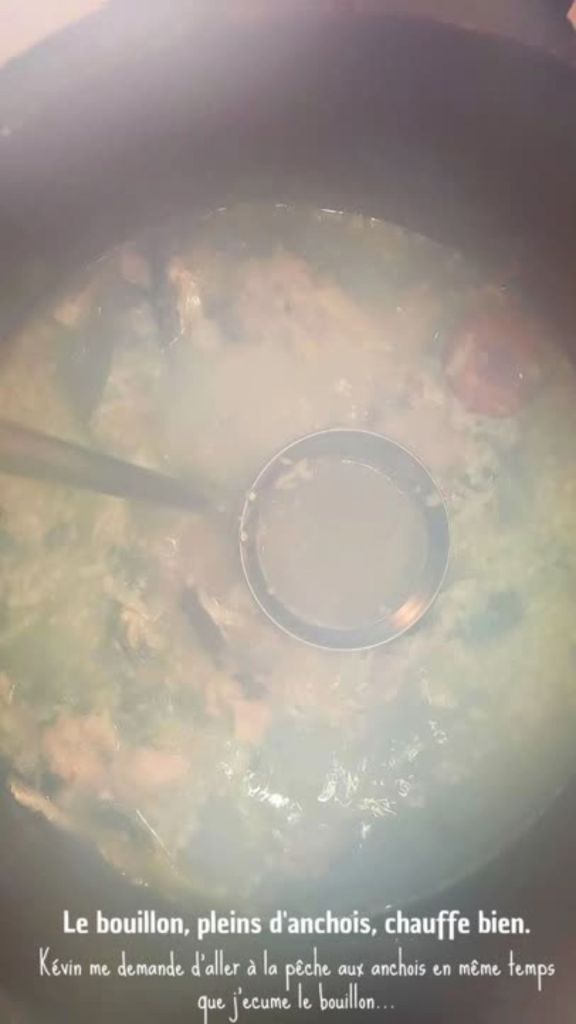
The course begins with an explanation of tastes and flavors. Through this, Nahoko introduces us to the concept of umami (うま味), which is so famous in Japan. In Japan, this term simply means « delicious, » but in several languages such as English, Spanish, and French, the word has not been translated and is used as is. Scientists have long debated the umami as a new basic taste. It is in 1985 that umami was officially recognized as a scientific term to describe the taste of glutamate and nucleotides. This taste, which covers the entire tongue, has long crossed Japanese borders. Umami is globally recognized and is widely used throughout Asia. It is often created through the use of MSG or monosodium glutamate. This white powder, often referred to as the « magic and secret ingredient » by restaurateurs, is banned in Nahoko’s cooking for our greatest pleasure. Here, umami is found by making broths the right way: with vegetables, herbs, a chicken carcass, and… anchovies. There it is, the word is spoken and Kevin is lost. Eva struggles to hold back her laughter, seeing Kevin’s face fall apart. He regains his composure and pretends nothing happened… well, for someone who doesn’t know him.
Nahoko also informs us that we will not be making tonkotsu ramen (pork ramen) but a chicken miso ramen based. It’s our favorite, and we are delighted!
It is now time to move on to the practice.
Kévin is assigned to gut the anchovies—what a lucky guy! In the meantime, Eva skims the broth to minimize bitterness.
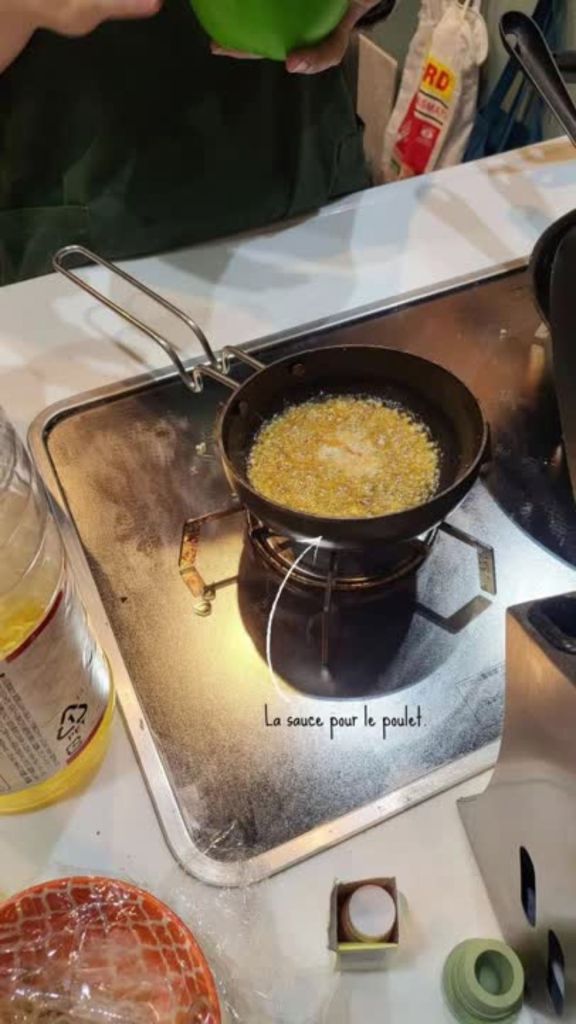
We are also preparing the sauce for the chicken with gluten-free soy sauce, please! Nahoko definitely understands the issue and is very diligent in her approach.
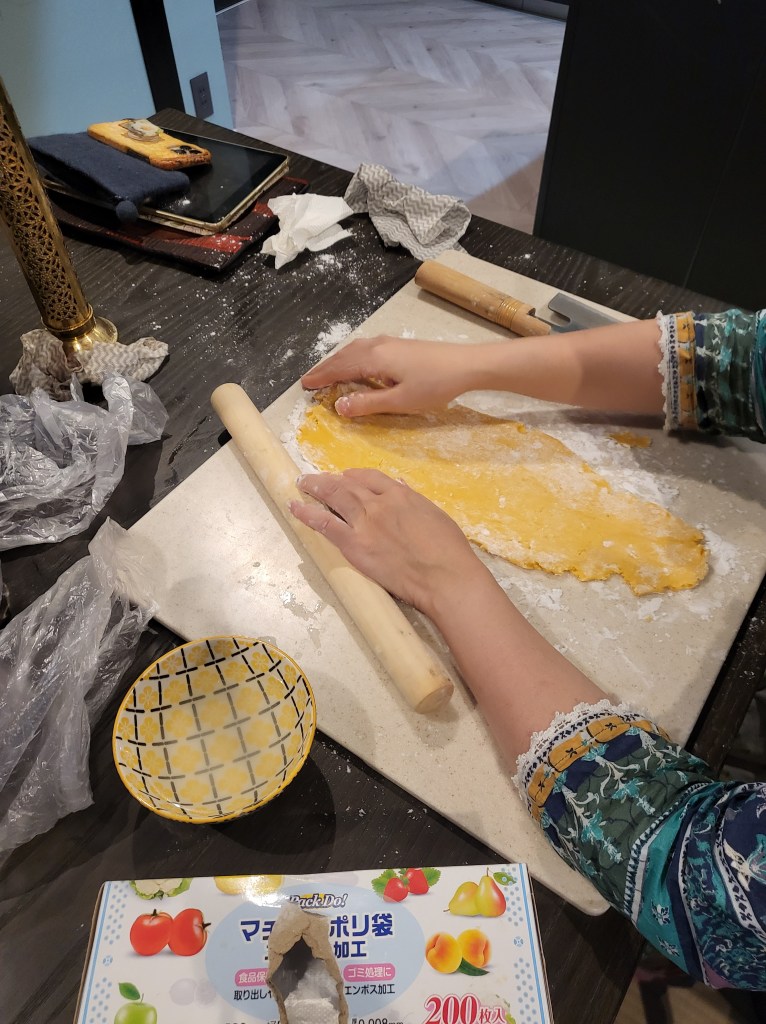
It is now time to prepare the noodles dough. Rice flour, psyllium, and agar are used as a base for Eva. Again, Nahoko confirms her good knowledge of gluten-free cooking, and psyllium is perfect for adding elasticity to gluten-free pasta. Making noodles dough takes time, and achieving the perfect texture requires experience, which Nahoko is eager to share with us. Eva shapes her pasta using a rolling pin and a special knife to avoid any risk of cross-contamination, while Kévin has it easy with a pasta machine.
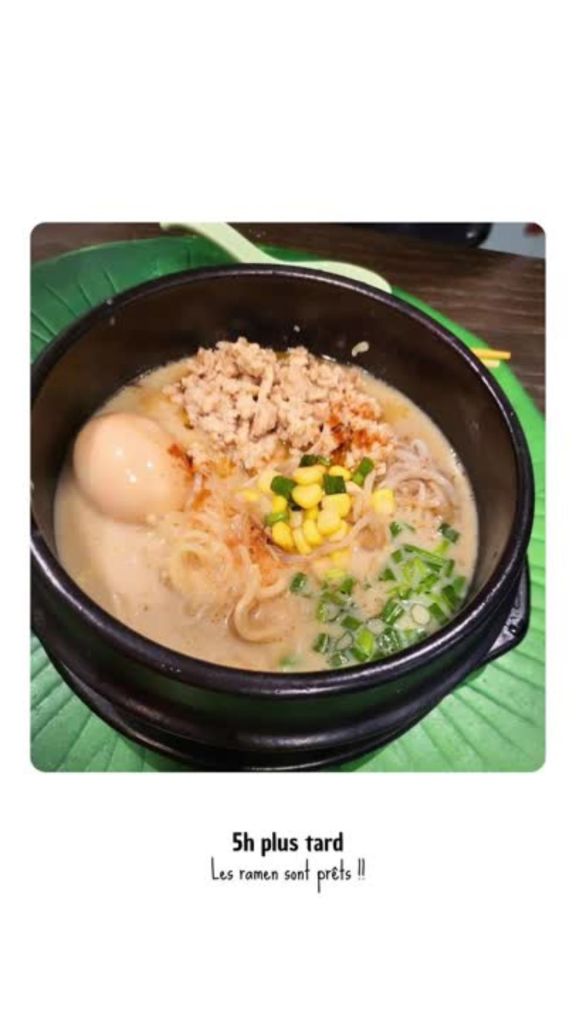
We finish preparing the garnishing in no time. We sauté the chicken in its sauce. We are preparing ajitama, those extremely popular eggs served with ramen. What makes them special? Their yolk is just runny and deliciously marinated in a sauce made of soy sauce, mirin, and garlic to achieve umami. We cook the pasta, then we serve it with broth, chicken, corn, ajitama, bean sprouts, and scallions.
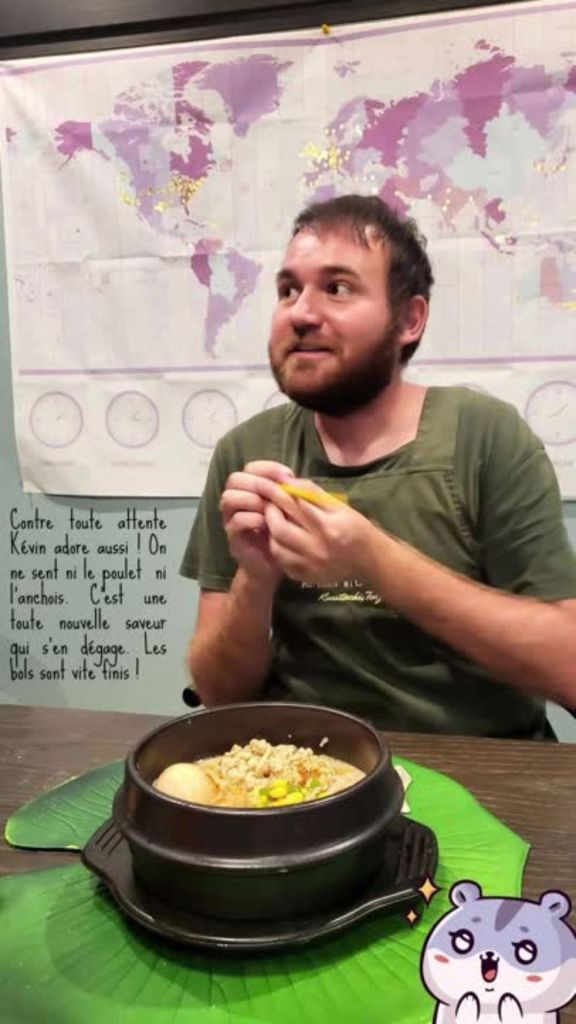
Nahoko tells us to eat quickly, but it’s too hot! Our mouths and throats are burning. That doesn’t completely prevent us from savoring. These are surely the best ramen we have tasted so far, and Nahoko’s homemade miso plays a big part in providing its unique and delicious taste to the broth. Even Kévin agrees, which says a lot! The anchovies are noticeable, it’s true, but only as an aftertaste. This allows him to fully enjoy the « first taste. »
Pictures extracted from the Instagram story we created for the occasion (sorry for the French text on the pictures, when clicking on the pictures you will find English description)

In a nutshell
Our opinion
We hesitated a lot before joining this course, but we absolutely do not regret it.
Not only did we REALLY learn to cook delicious homemade ramen, but we also had a great time with Nahoko. Kevin was able to practice his Japanese with Nahoko. She took the time to share important aspects of Japanese culture with us, explained how to behave in certain situations, helped us decipher certain attitudes, and even offered advice on our itinerary.
So of course, it is still quite a budget. But for those who can afford it; for those who are ramen fans; for those who are gluten-free, go for it!!
Feel free to contact Nahoko if you are interested in learning to cook something other than ramen. She has already conducted gluten-free gyoza and tsukemen classes.
Practical Side
How to organize it?
Contact Nahoko via the form provided on her website: https://peraichi.com/landing_pages/view/yummy-ramen-online-class/
Where to take this course?
In person, this course is held at Nahoko’s in Tokyo, specifically in the city of Kunitachi, which is about 30 minutes from Shinjuku.
Nahoko also offers her services via video call. These lessons are even open to those who do not plan to travel to Japan.
What is the budget?
The ramen course is quite expensive: 12,900¥ (approximately $84) for the classic version, and 18,900¥ (approximately $116) for the gluten-free version.
All our gluten-free articles and guides in Asia


COMMENTAIRES
 Le goût du monde sans gluten
Laisser un commentaire