
|
4 days in Kyoto: between tradition and modernity
A stay in autumn in Japan: part 2/7
Published
on
Last
modified
on


Day 1: Visiting Kyoto
We wake up in Osaka feeling refreshed after a 10-hour sleep: it allows us to catch up on the delay caused by the time difference. We eat our onigiri for breakfast. It’s a habit we will keep throughout the trip.
Today we are leaving our accommodation and it is time for us to join Kyoto.
We will travel by train (we purchase our tickets using the IC card) and the journey lasts about thirty minutes.
Once in Kyoto, we follow the same procedure as in Osaka and look for coin lockers to free our shoulders from our heavy bags. This allows us to explore the city more freely. Just like in Osaka, we find them everywhere. We even manage to find one large enough to hold all our luggages. This time, we will pay for the lockers with the IC card, which is even more convenient than using coins since there’s no need for change here.

We can now tackle the city tour.
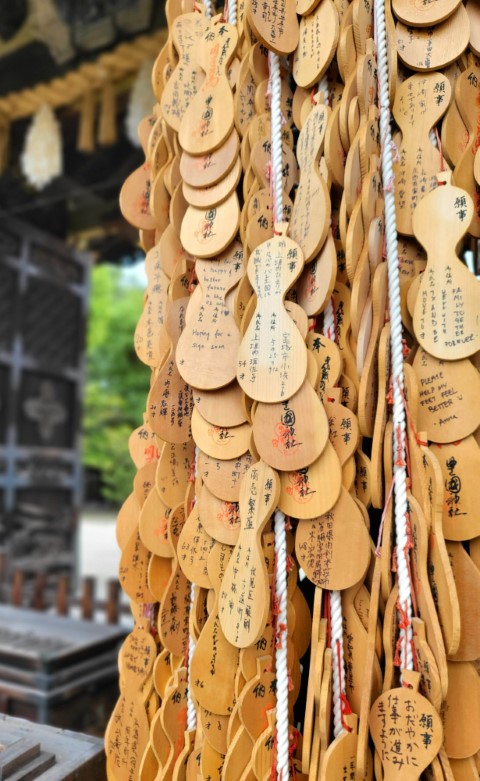
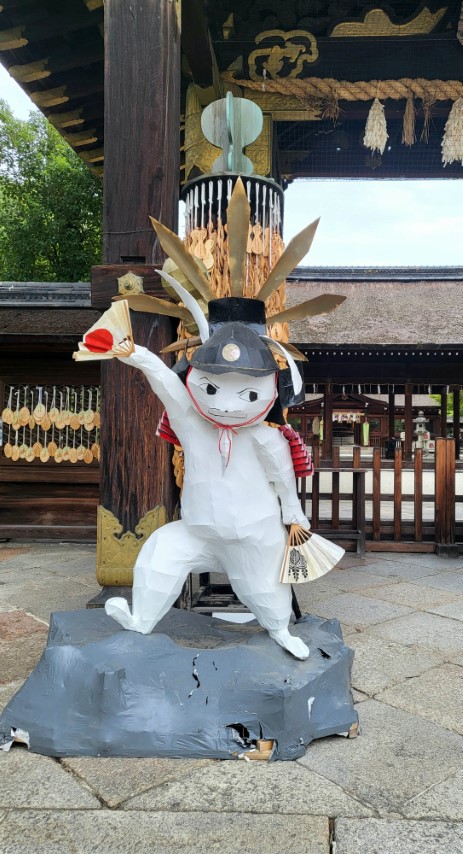
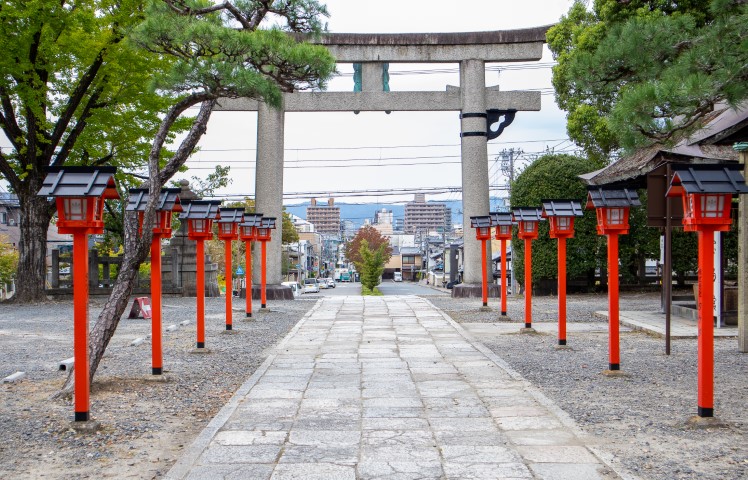
We want to head to the Kiyomizu district, but on the way, we stumble upon an isolated temple. We take advantage of the lack of crowds to buy our Goshuinchô. It is a notebook that costs 1000¥ and is used to collect stamps from places of worship, the goshuin. Having a Goshuinchô is a way for us to keep track of the temples and shrines we visit. Collecting the goshuin is also a little game regarding whether the calligraphy will be to our liking. We also take the time to observe the differences between each. From what we’ve read, the Japanese also collect these stamps more as souvenirs than for their religious significance, which has become less important over time.
Previously, to receive a Goshuin, one had to recite a prayer or write a sutra. Nowadays, you will need to pay 300¥ at the temple counter and ask Goshuin itadakemasu ka ? (May I receive a Goshuin?).
Generally, the goshuin will be done by a monk, and after it is stamped, you will need to wait a few moments for it to dry. In other, rarer cases, you will be given a sheet to stick in your notebook. So if, like us, you prefer to collect the goshuin directly stamped in your notebook, don’t hesitate to inquire in advance whether the stamp will be freshly made or if you will be given a sheet that you will need to stick in your notebook.


We then resume our journey to reach one of the streets in the Kiyomizu district.
While the streets were relatively calm so far, we find ourselves crowded in a throng of tourists on Matsubara-dori. It’s not a big surprise as the area is known for its significant tourist influx. The neighborhood is lined with very typical alleyways full of charm, including Sannenzaka and Ninenzaka, which are two cobblestone lanes bordered by traditional houses, charming small shops, and street stalls. I recommend enjoying it mainly with your eyes because prices here tend to be higher. The names of these alleys literally mean the slope of 3 years and the slope of 2 years. Various legends exist about them: one recounts that if you fall in one of these streets, you would respectively have only 3 or 2 years left to live. So if you’re superstitious, be sure to keep your footing!
We stop in one of the Ghibli shops in the city. It’s a bit overwhelming as the store is very small and packed. No regrets about not lingering too long, as we will find similar goodies in many other shops, both in Kyoto and generally all over Japan.
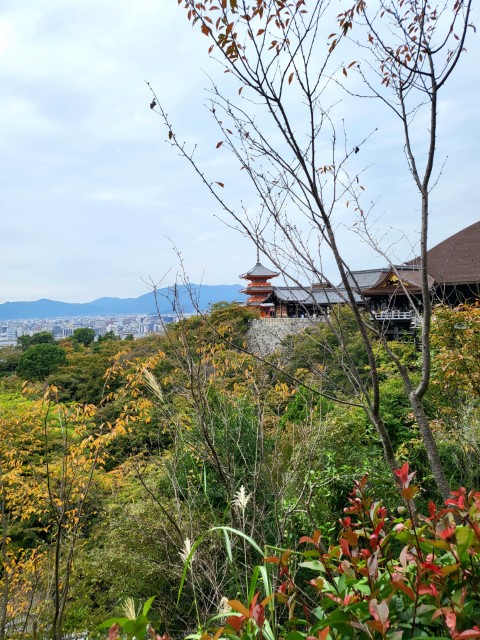
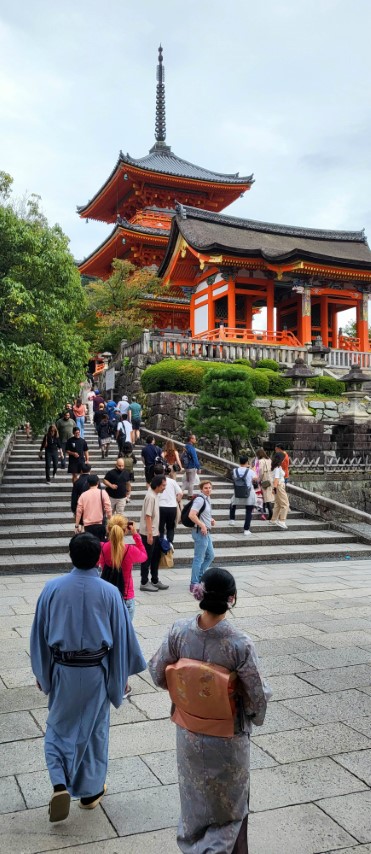
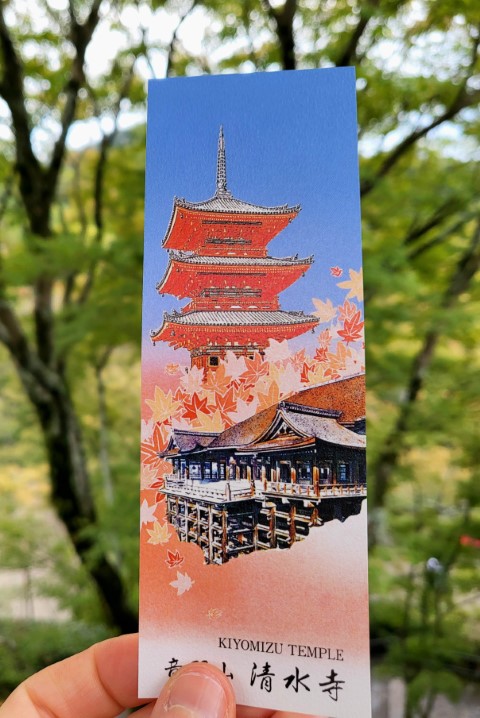
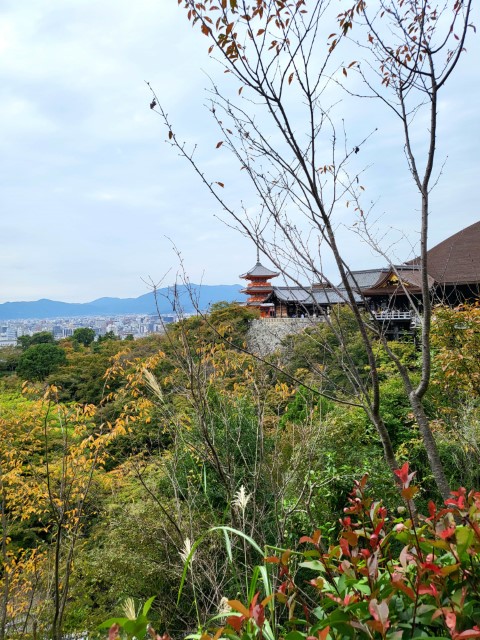
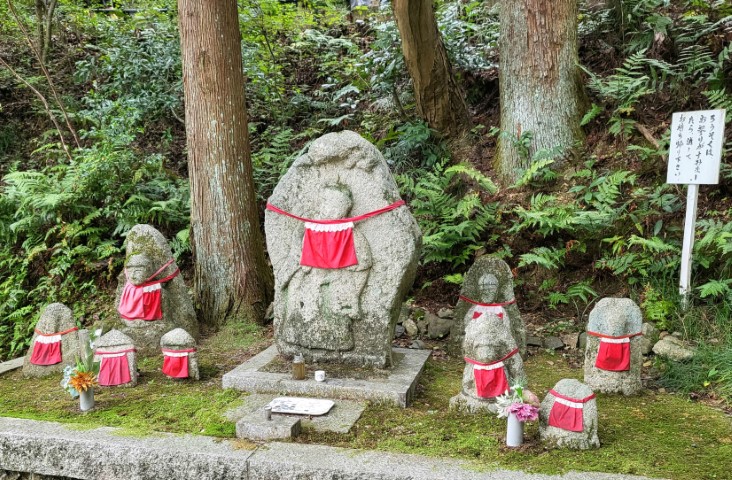
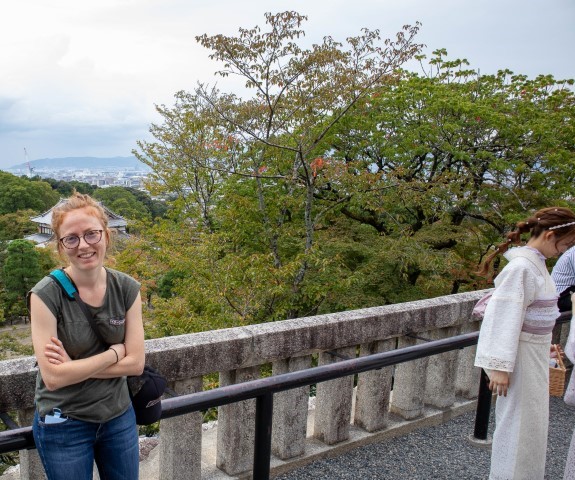
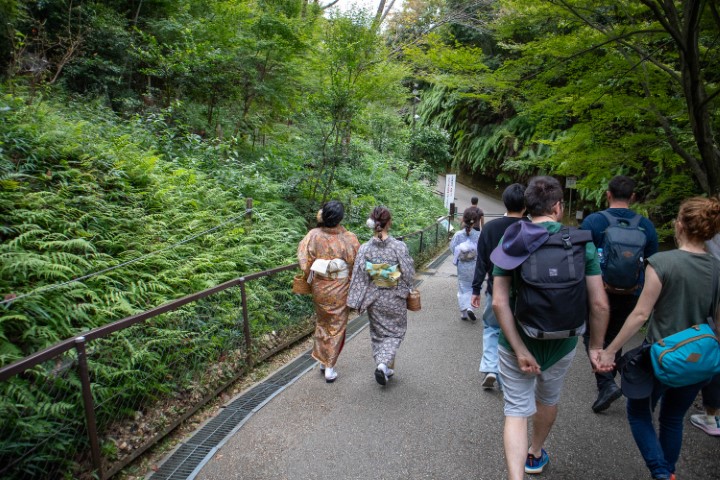
We manage to rejoin the crowd on the street to continue exploring the area and especially reach the Kiyomizu-dera temple. The temple overlooks the city and offers a beautiful viewpoint. From here, one fully realizes the charm of Kyoto, which is a blend of traditions, with its numerous temples, and modernity. Many people are dressed in yukata or kimono, including both Japanese and tourists, with many shops offering rental of this traditional attire before the temple. The temple entrance fee is 400¥ (about 3€). It is very large and pleasant to visit. We also take the opportunity to complete our collection of Goshuin. One can also see Jizō statues, these stone statuettes often dressed with a red hat and a bib. This reminds us of the journey in Spirited Away or even Zelda. These statuettes have many meanings, and if you want to know more, feel free to read this article that discusses it very well.
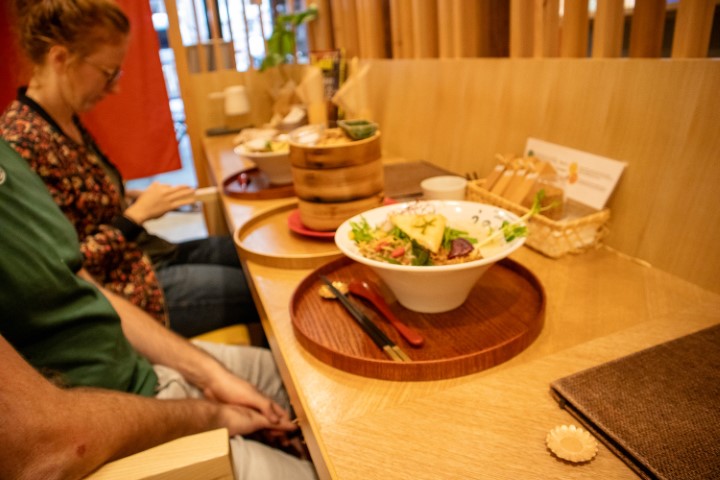
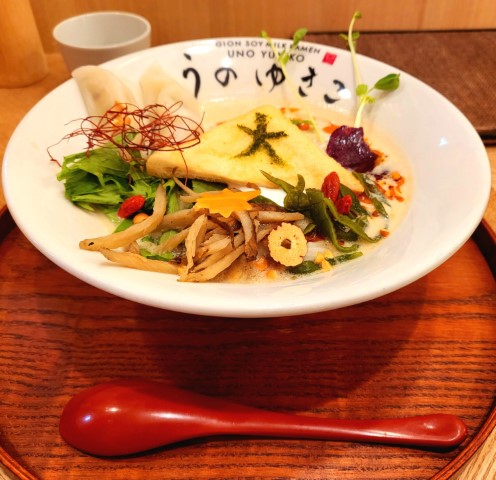
Next, we head to the restaurant Gion Soy Milk Ramen, a 100% gluten-free restaurant. It wasn’t our first choice, but finding a restaurant open at noon in Kyoto offering gluten-free options turned out to be more complicated than expected.
On the way, Kévin and Nicolas stop at street stalls to eat fried dumplings, with one filled with cheese and the other with octopus.
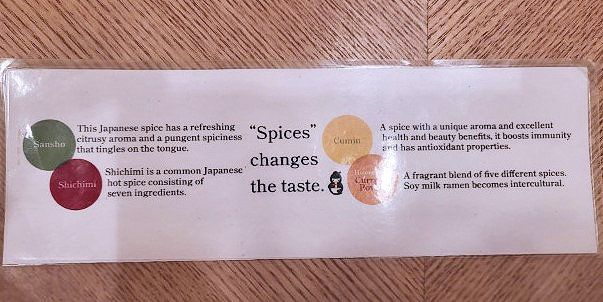
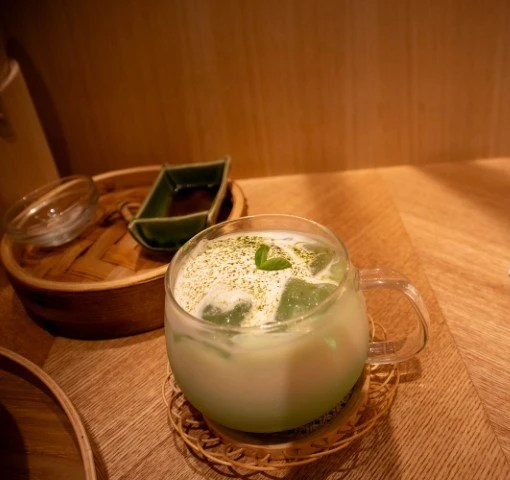
We take advantage of the restaurant being 100% gluten-free to taste various traditional Japanese dishes: gyozas with different fillings, ramens, and drinks made with matcha and cherry blossom. Everything is very good, and we once again discover new flavors. However, the ramens are a bit too spicy, and we shed a tear or two during the meal. At the end of the meal, Nicolas tries for the first time to say in Japanese that the meal was delicious. We scoured various websites to cross-check the information and ensure he says it as well as possible. We settle on Totemo yokatta desu. The manager seems embarrassed, but we cannot tell if it’s due to the compliment or because the phrase was spoken while looking her in the eyes. It is true that we had read, and we could see, that the Japanese feel very embarrassed when looked in the eyes, but it’s not easy to shake off our usual habits. We will definitely need to try again.

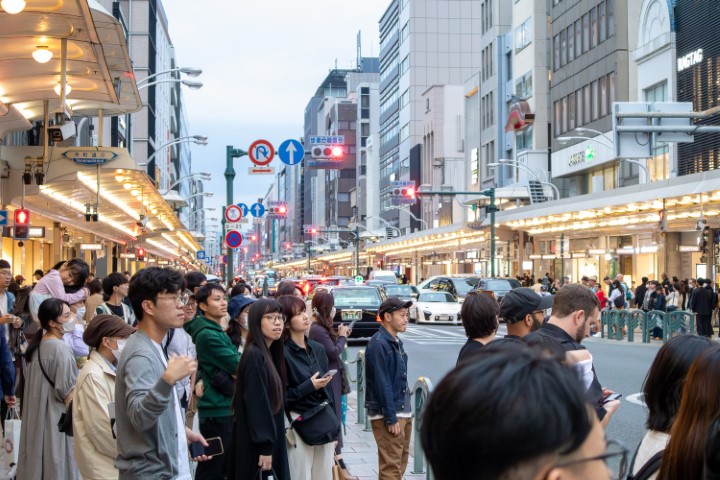
We continue the day by strolling through the neighborhood of Gion, and we finally encounter roads with heavier traffic as we make our way to the Yasaka Shrine. This vast Shinto sanctuary is known for hosting the Gion Matsuri in July and is a place of celebration during the transition to the New Year. Many people also visit the adjacent Maruyama Park during the season of ohanami, which refers to the cherry blossom blooming. Currently, no special events are taking place, but we still enjoy the various street stalls present at the entrance of the temple. Nicolas indulge in some yakitori.

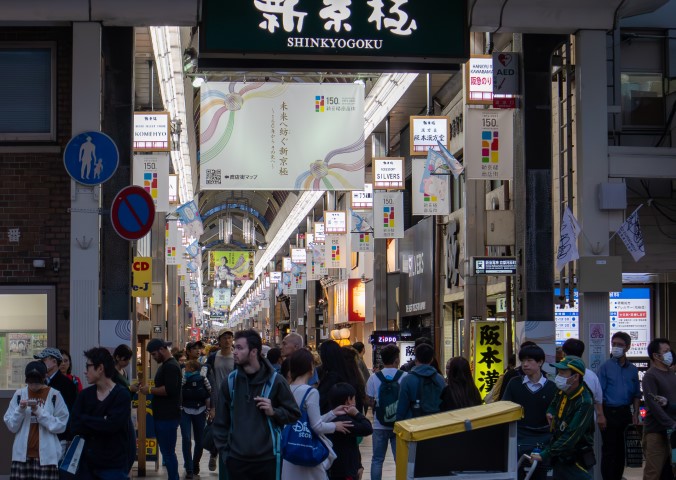
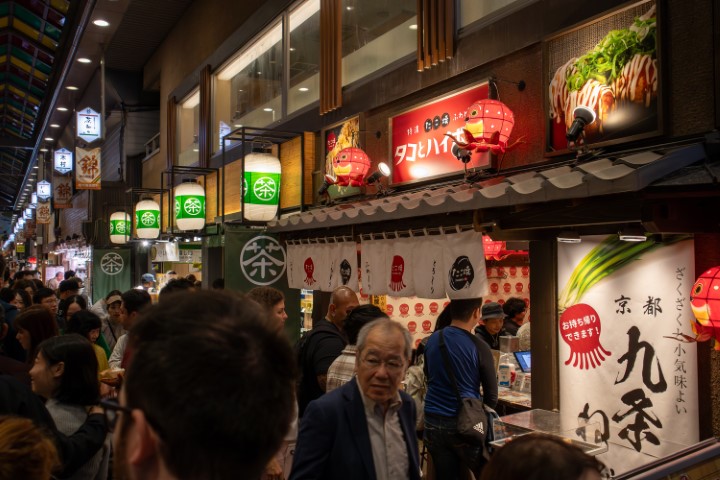
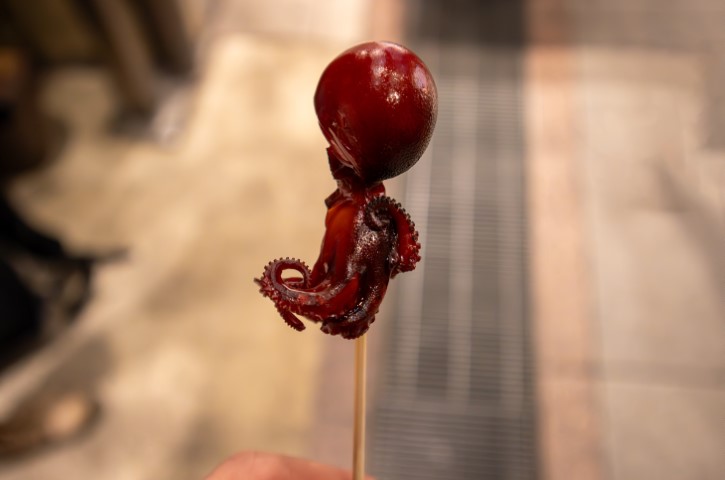
Next, we head to the Nishiki Market, a well-known market famous for its numerous stalls and street stands. You can find fresh products, prepared dishes, as well as shops selling kitchen utensils and some souvenir stalls. Despite the late hour, it is extremely crowded. We have difficulties to truly enjoy the stalls. Nicolas still manage to taste a small braised octopus.
I highly recommend going there as soon as it opens if you really want to enjoy the experience. On Wednesdays and Sundays, some of the stalls will be closed, so avoid these days if you want to enjoy the most complete experience possible.
We then return to the station to retrieve our bags.
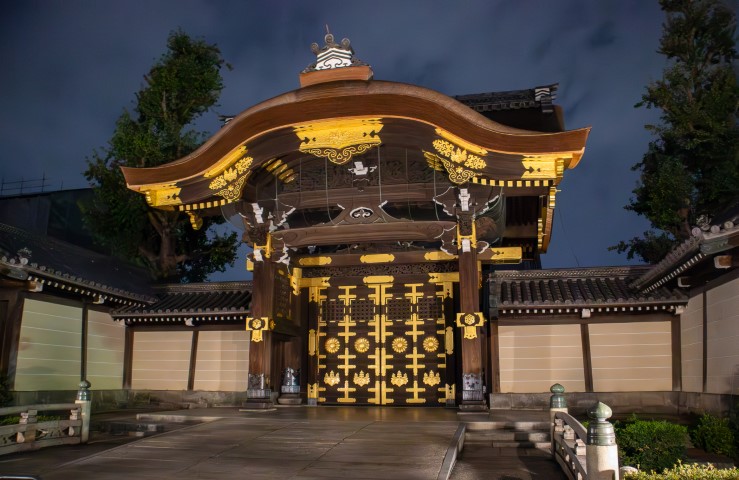
We pass by the illuminated Higashi Hongan-ji, a Buddhist complex that is one of the largest wooden structures in the world. It was built in 1602 and was restored during the 19th century following the fire that ravaged it.
We also come across the Kyoto Tower, a much more modern building, which at 131 meters is the tallest structure in the city.

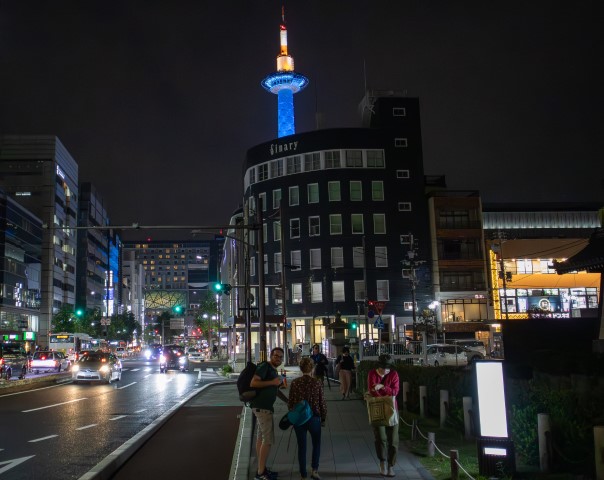
The day is still not over as we now need to find our accommodation.
It is located in small alleys not far from Nijo Castle, which we reach by train and then walk for about twenty minutes in the rain. We arrive in a very dark alley that we illuminate as best as we can with our phones. The instructions provided by our Airbnb host are sparse and the answers to our questions don’t help us much. It is ultimately one of the few Japanese people passing by who will point us to our lodging!
We drop off our bags, take a well-deserved shower, go to the nearest 7/11, have dinner, and happily crawl into our futons.
Here is a view of our itinerary (I’ll spare you all the little streets where we got lost or made intentional detours). Click on the picture to open it in Google maps.

Day 2: Arashiyama
We continue our visit to Kyoto and its surroundings by heading to the locality of Arashiyama, well-known for its bamboo forest.
We take the train: the journey is direct and lasts about forty minutes.
We arrive at the Saga-Arashiyama station.
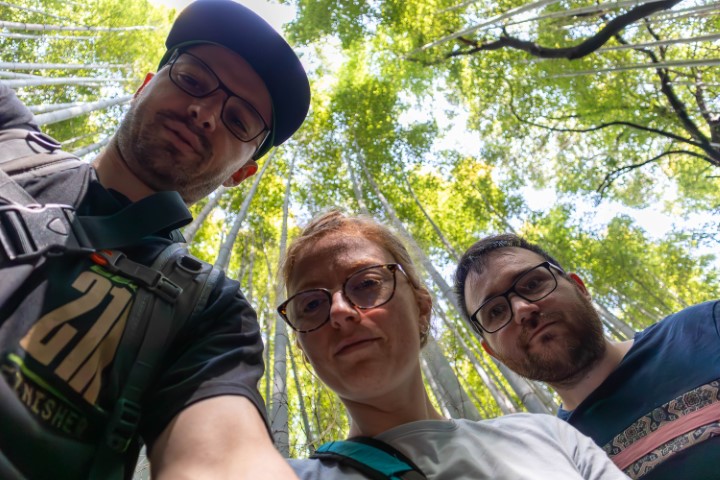
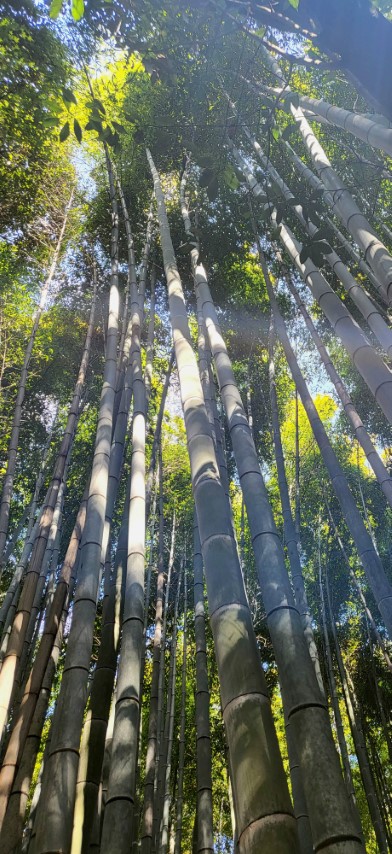
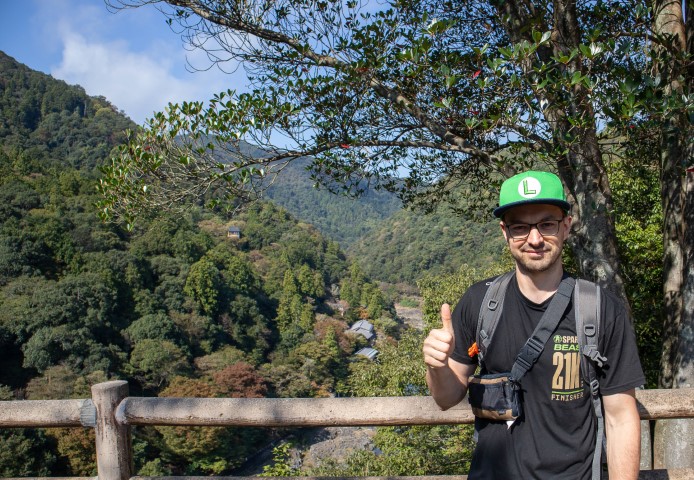
We start our stroll at the bamboo grove. We arrived early enough for the area to still be relatively uncrowded, which is helpful as it is quite small! Fortunately, there are plenty of other things to see in Arashiyama, and despite what you may read here and there, for me, the best part is not in the « bamboo forest » but rather in the adjacent park that offers a beautiful view on the Katsura River and the nearby groves. We still take the opportunity to do as everyone else and snap our little photo surrounded by bamboo.
Then we continue our way to the Arashiyama park. We take a detour to Ogura pond. The water lilies have all wilted, but the view is still pleasant and filled with (magnificent) yellow spiders.
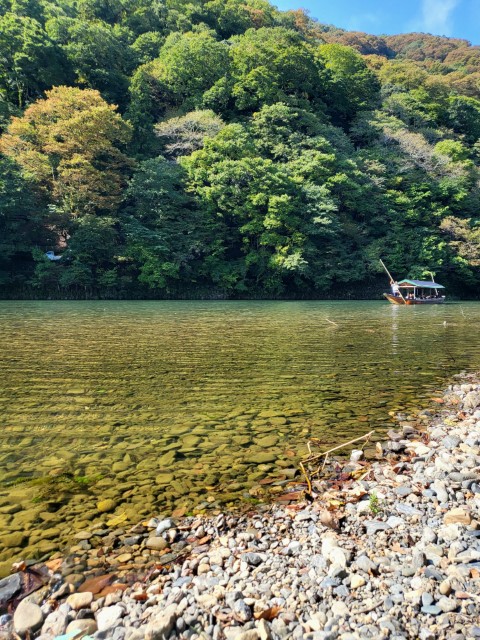
We walk through the park until we reach the viewpoint, then we descend to the banks of the Katsura River, where we have fun skipping stones and earning sugoi praises from the Japanese.
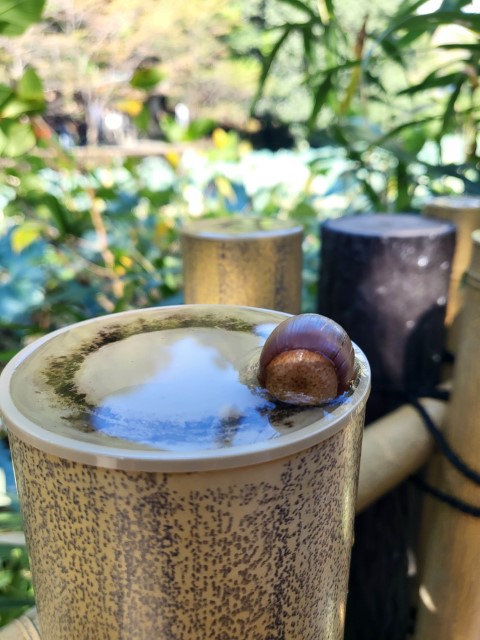
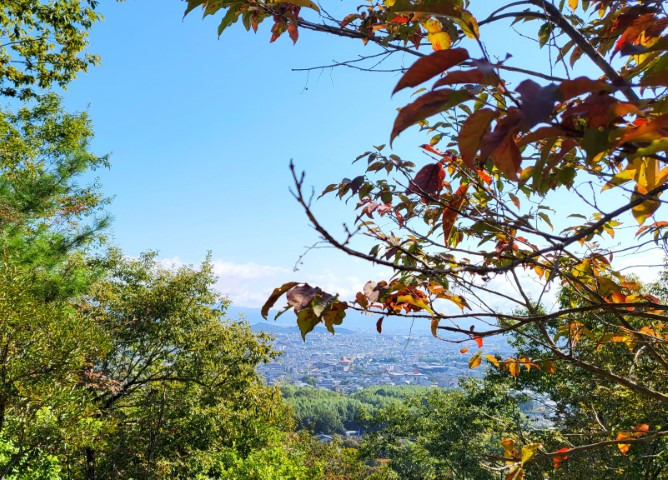



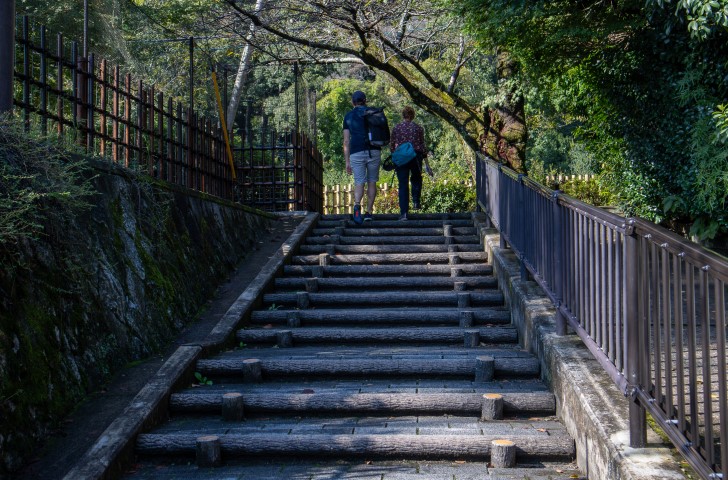
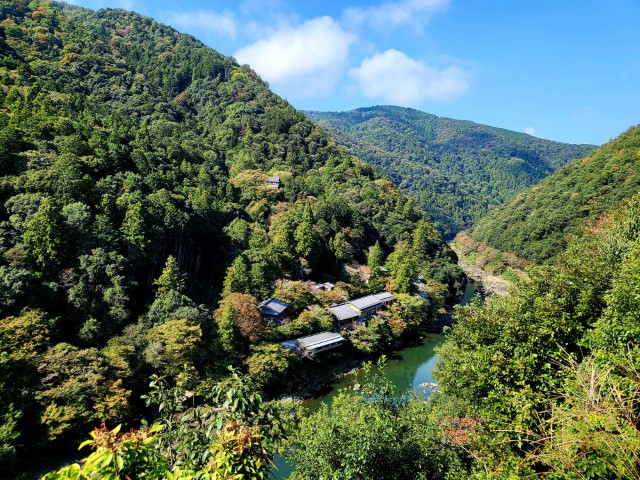
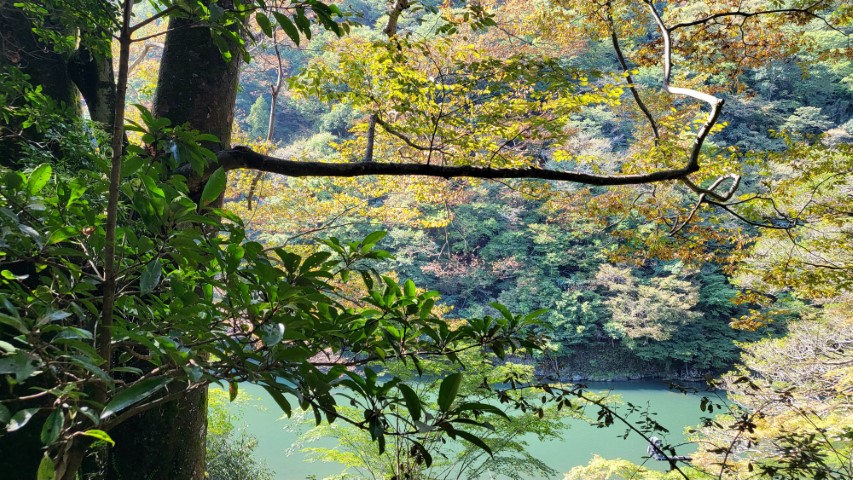
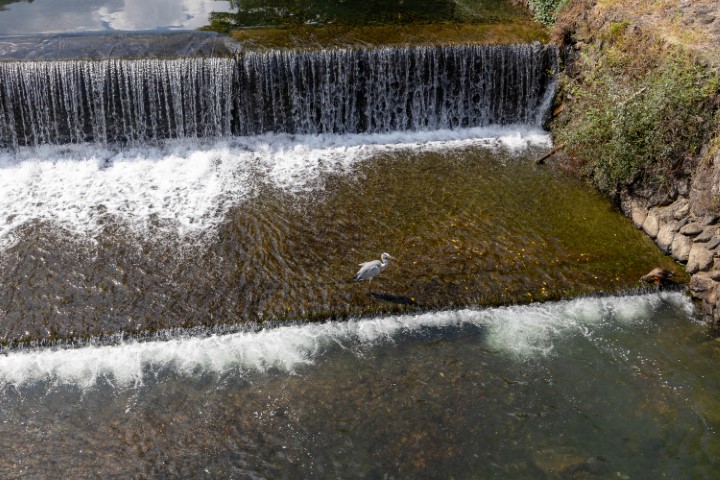
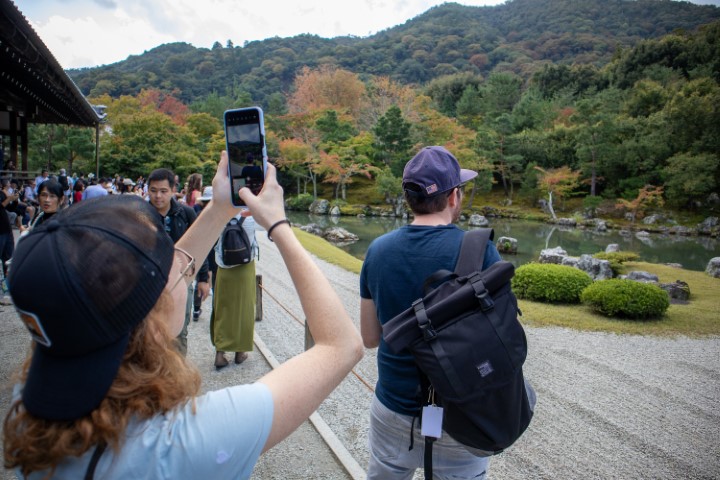
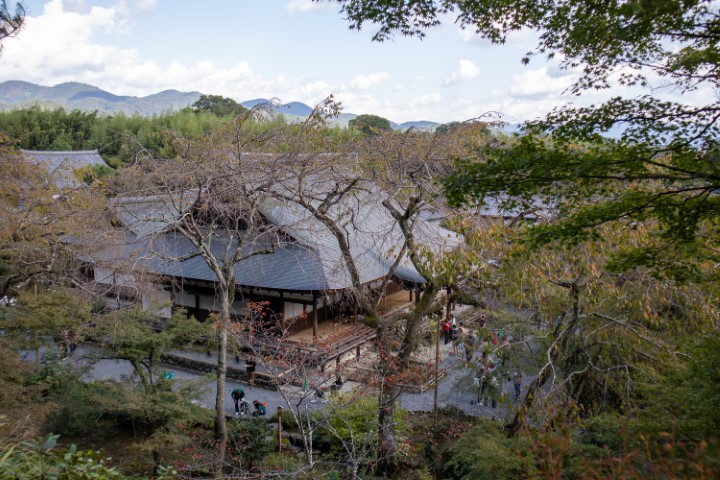
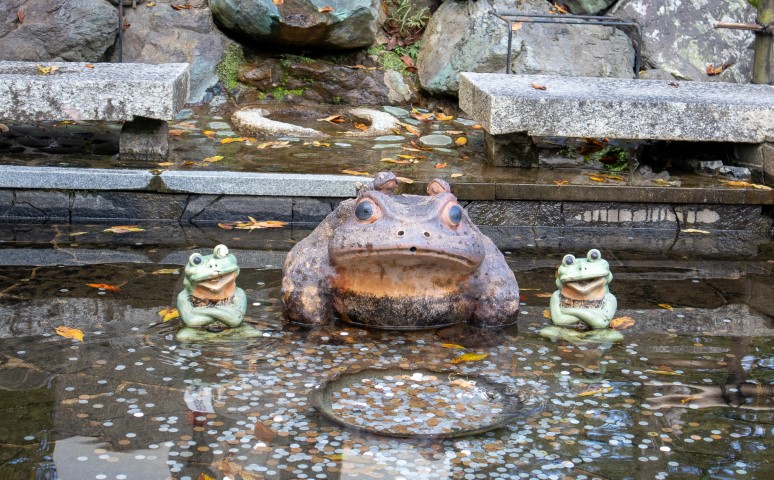
Later, we pay the entrance fee for Tenryu-ji to access the flower garden. There are only a few flowers at this time, but we can still admire a garden as only the Japanese can do. We also see the maples starting to show a few red leaves. However, it is still too early to fully enjoy them, and their redness should be at its peak in November.

We then head to the center of Arashiyama. It’s a very cute little downtown area. The streets are lined with restaurants, street stalls, and souvenir shops.
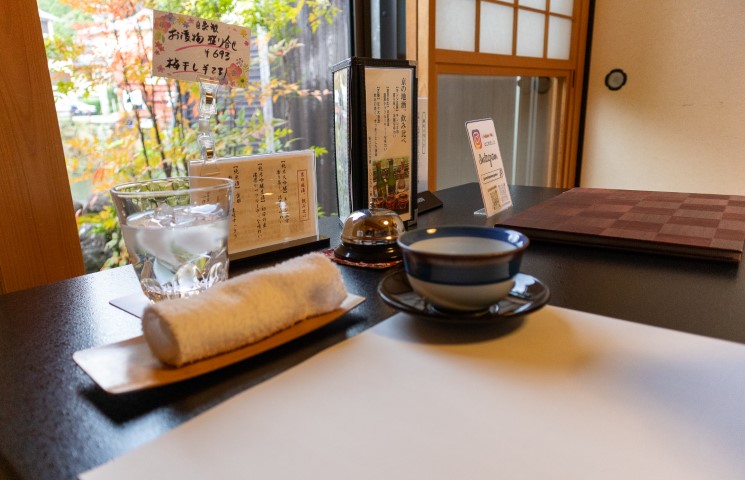
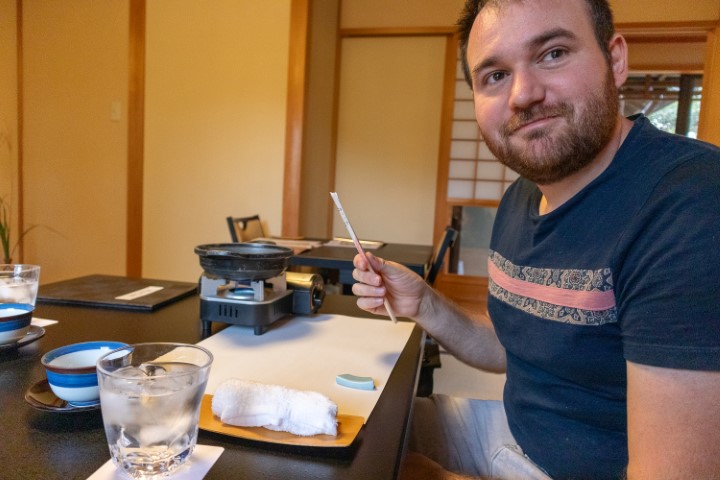
We cross the Katsura River to reach a shabu-shabu restaurant. The concept of these restaurants is to cook thinly sliced, well-marbled meat and vegetables in water that has had konbu seaweed added to it. Once cooked, each element can be dipped into various sauces (soy sauce, ponzu sauce, and sesame sauce). The broth and sauces are adapted for Eva, as outlined in the gluten-free guide to Japan.
Here, we experience true Japanese culture as we dine on tatami mats after having removed our shoes: the immersion is complete.
We end our meal on a sweet note at a street stall with a daifuku filled with strawberry for Nicolas and a skewer of caramelized strawberries for Kévin and Eva.
We head towards the well-known café % arabica, famous for its quality coffee. It is true that we find it difficult to drink coffee in this country where tea reigns supreme, and we see this small shop as a boon. However, the long line and the high prices (€8 for an espresso) make us turn back.
The rain arrives, and we take refuge in the first small café on our path. It’s a Costa café that manages to bring us some Japanese specialties, and the ordering is done with a machine similar to the one used in a ramen restaurant.
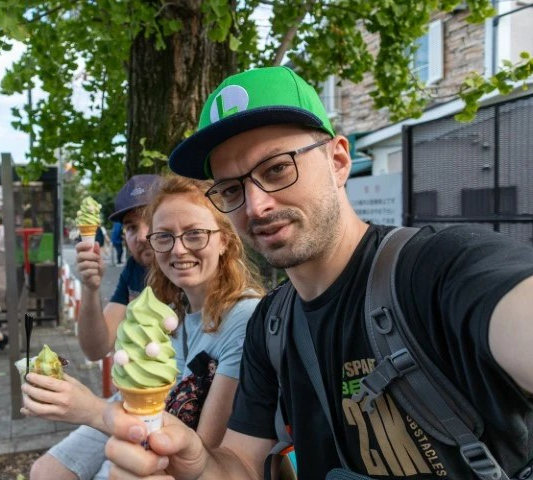
We head back to the station and grab a matcha ice cream (the indulgence is endless). Like all Japanese treats, they are less sweet than what we’re used to, and that’s totally to our liking. The matcha here is also much less bitter than what we have at home, and Nicolas and Eva are rediscovering their love for it.
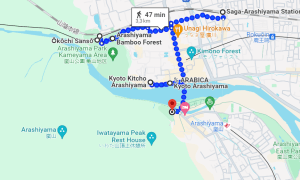
Ci-après le lien de notre itinéraire dans Arashiyama: Google maps itinerary.
We return to Kyoto and on the way back we unexpectedly come across a temple.
It’s amazing how many temples are hidden in Kyoto. They offer a true haven of peace and completely cut off from the city’s hustle and bustle: it’s very pleasant and it changes from the experience one might have in a classic European city.
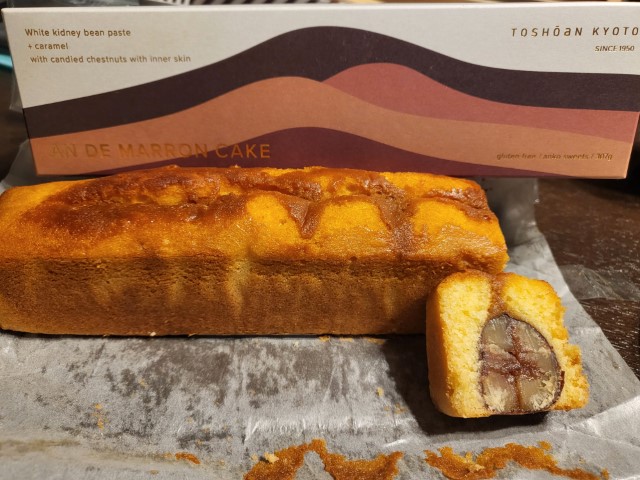
We continue our journey to Toshoan, a 100% gluten-free bakery, so that Eva can buy some sweet snacks.


We end the day with some small shopping for dinner in our favorite konbini, 7/11.
Day 3: Fushimi Inari and the South of Kyoto
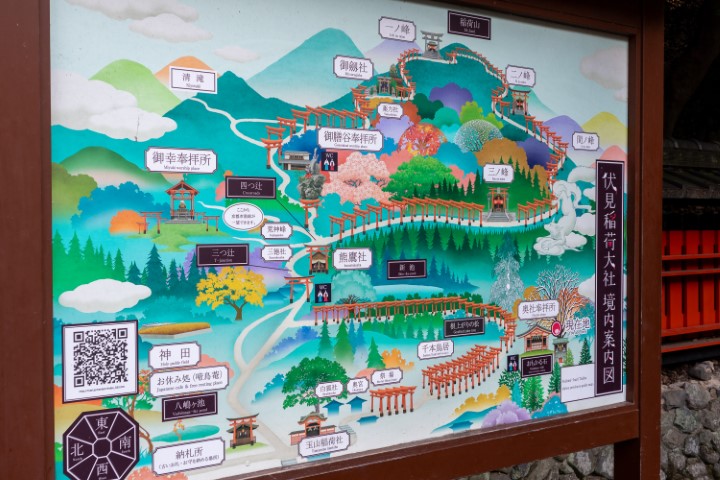
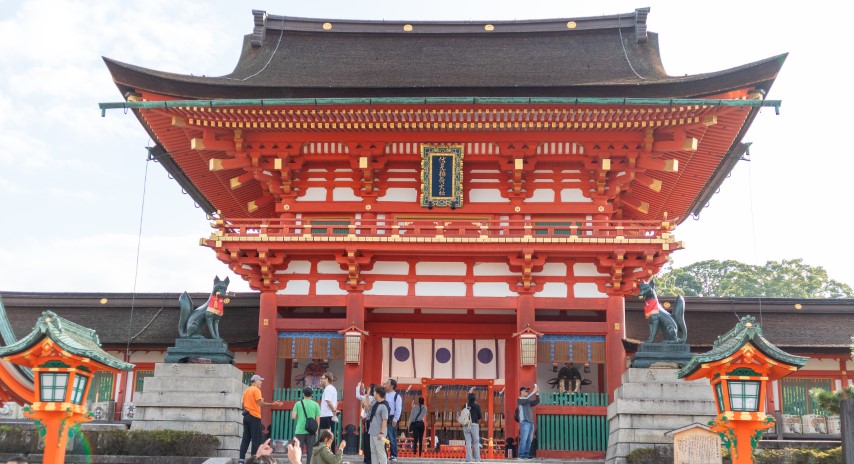
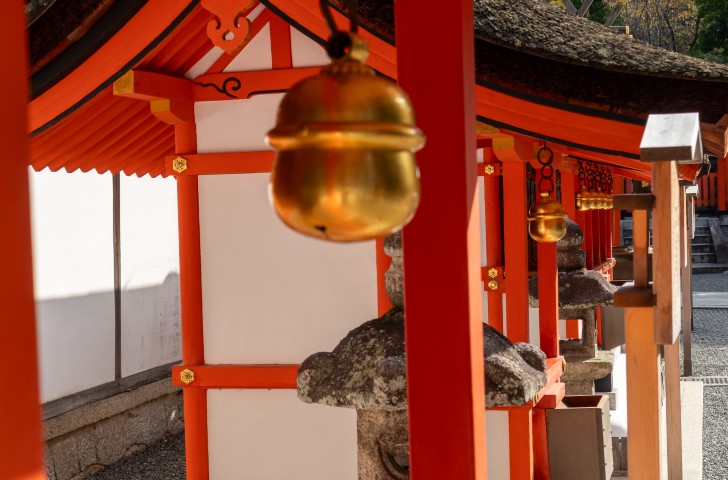
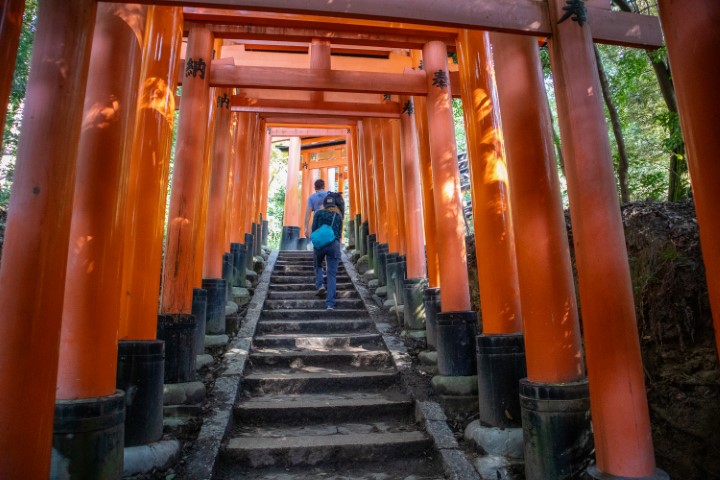
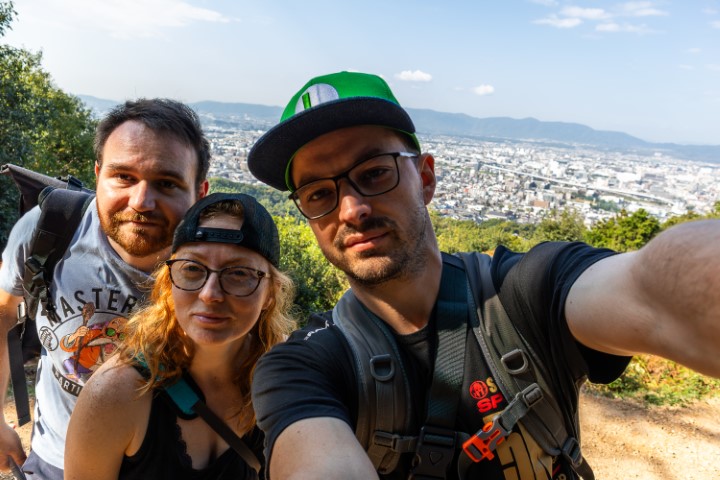
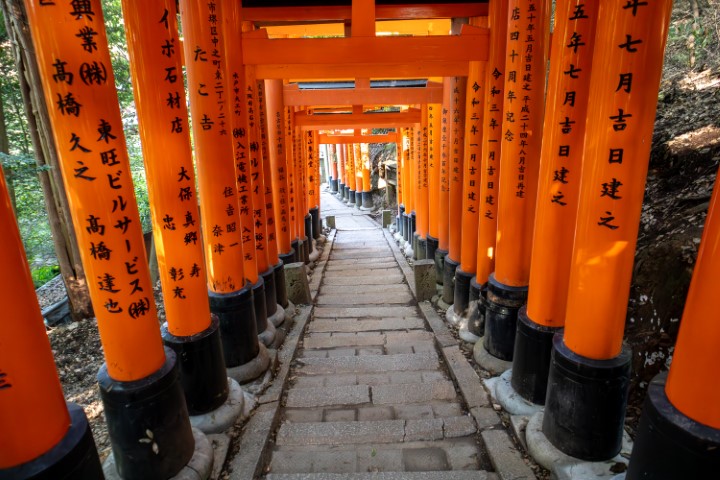
This morning, we take the train early to arrive at Fushimi Inari, another popular touristic destination famous for its thousands of torii gates, arranged all the way up to the summit of Mount Inari, which is situated 233m above sea level. Fushimi Inari-Taisha is a complex of small shrines dedicated to the rice goddess Inari, established in 711, and entry is free.
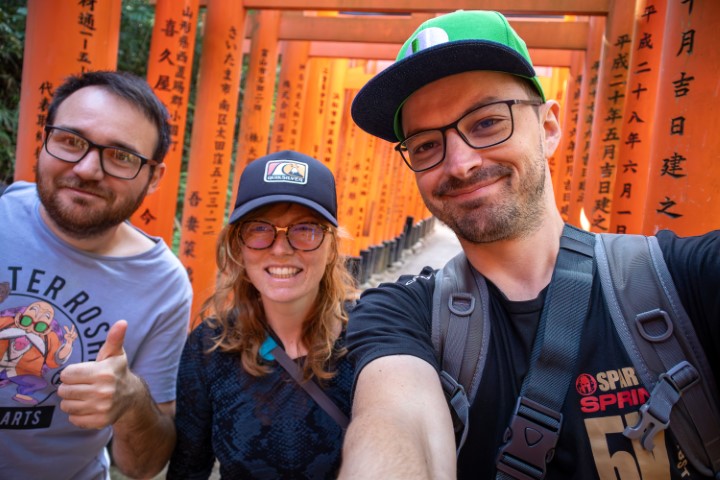
We arrive around 9 a.m. It’s a bit too late since there are already quite a few people, especially at the first torii, those positioned directly before the first steps. The number of people decreases as we climb the stairs, making it more pleasant.
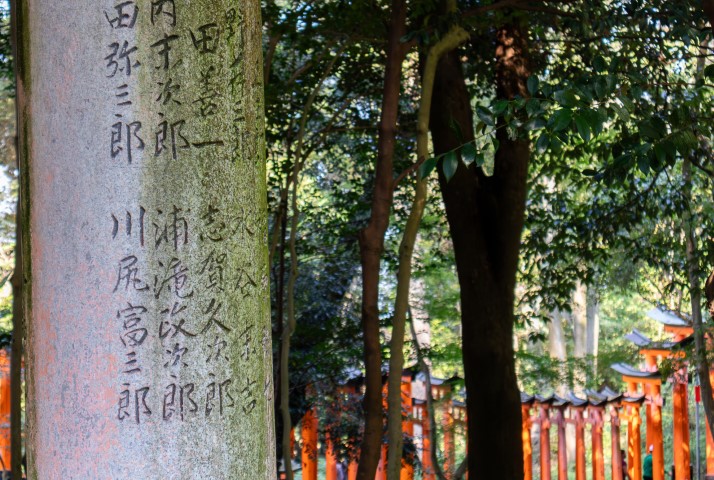
We enjoy observing the different torii, which vary in size and materials as they come from different donors. These fragile torii are regularly replaced and cost between 175,000 and 1,300,000¥ (something like $1,000 to $8500). We can clearly see the effect of time on these structures during our walk: some are broken, have been cut, and the paint is sometimes chipped or worn, but that adds to the charm of the place.
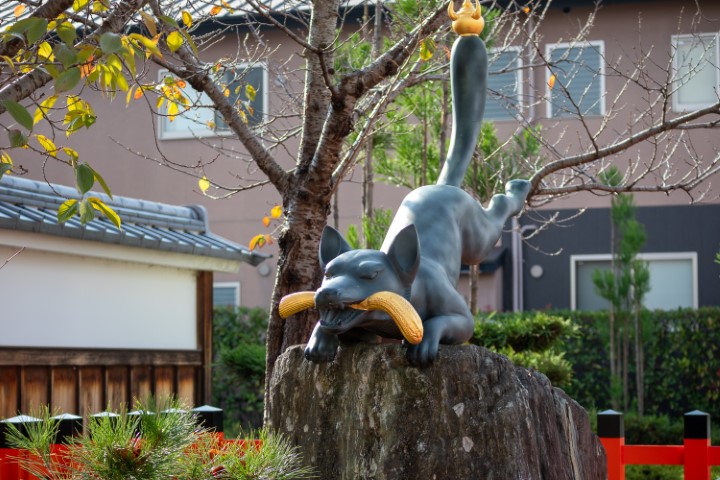
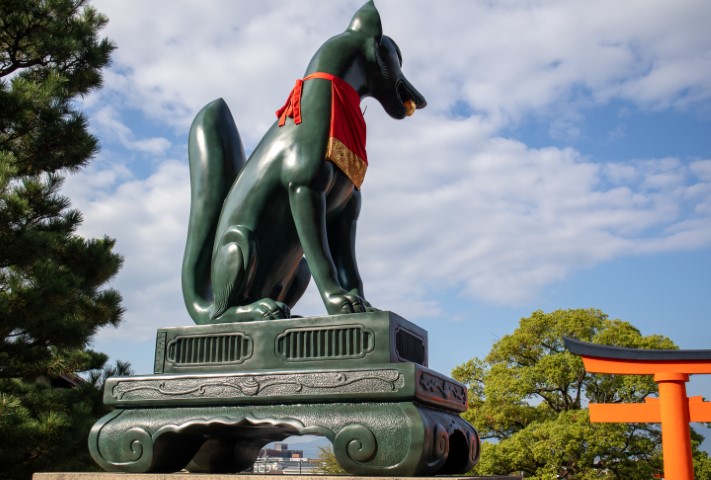
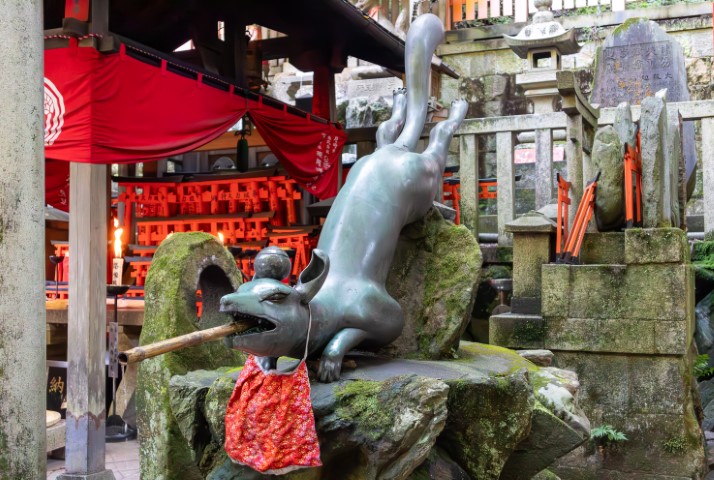
As we ascend, we also encounter various shrines rich in foxes (kitsune): it’s no coincidence that another name for Fushimi Inari-Taisha is the shrine of the foxes. The foxes are said to be messengers of Inari. They are adorned with various objects and sometimes wear clothing, including the famous red bib commonly found in Japan. This helps to personify the statues.
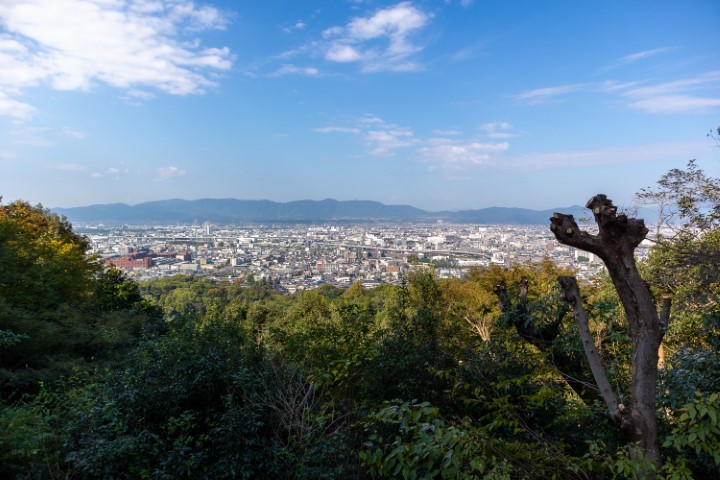
We gain access to beautiful viewpoints of Kyoto as we climb higher.
Then we reach the summit without realizing it too much. We expected to have a clear view or a lovely temple, but we find only a shrine. It’s still pleasant, and after wandering around, we make our way down.
The round trip took us approximately 2 hours.

We then take the train to the center of Kyoto. During the ride, we met some French people who recommended a Japanese curry restaurant called Curry Koisus. It’s true that the photos intrigue us, and even though Eva knows that Japanese curries are known for being not very compatible with a gluten-free diet, we decide to take our chances. We arrive in a small quiet street and inquire about gluten-free options. As expected, there are no possibilities for Eva other than eating rice. We suggest it anyway so that Kévin and Nicolas can enjoy the experience, but this is not feasible for the chef: it’s not the dish he offers, and we can almost sense his annoyance at such an alternative being suggested. So, we move on. However, if you have no dietary restrictions, I think this restaurant will offer you an experience you won’t find in Europe, at least that’s what the reviews on Google seem to indicate.
We then look for options close to us. We find an Ain Soph.. It’s a chain of restaurants that offers both Western dishes as well as those of more Eastern origin. They provide alternatives for various dietary restrictions, including gluten-free options. This restaurant chain is apparently quite popular among the Japanese. For our part, we prefer Japanese restaurants a lot more, and we think this place is a good backup option.
After a quick stop at Starbucks (with a beautiful view of the Kamo-gawa River), we take the subway for the first time.
It’s not as straightforward as the train: not all subway entrances are interconnected, and there are many of them! We take our chances (somewhat randomly) to see what it’s like. Several lines are accessible from each entrance, and we think we have found the ones we need to take. We go through the gate with our IC card, but unfortunately, it’s not the right line. We try to exit, still using our IC card, but the normally open doors close, preventing us from leaving. We eventually use the call button located near the gates. We meet an attendant who speaks only in Japanese: this time we can’t communicate with gestures. We manage to get our message across; the attendant seems to understand English better than what he says, and the gates open as we pass with our IC card.
Once back on the surface, we end the adventure and rely on Google Maps to find the number of the subway entrance we need to take. This way, it’s easier, and we arrive at our destination without any issues.
We stop at Nishioji Oike Station and walk the rest of the way. We are 3.3 km away from the temple: we try to walk as much as possible because we are motivated to see as much of the city as we can. However, this route does not allow us to see anything truly extraordinary, as we follow a major roadway and there isn’t much to see.
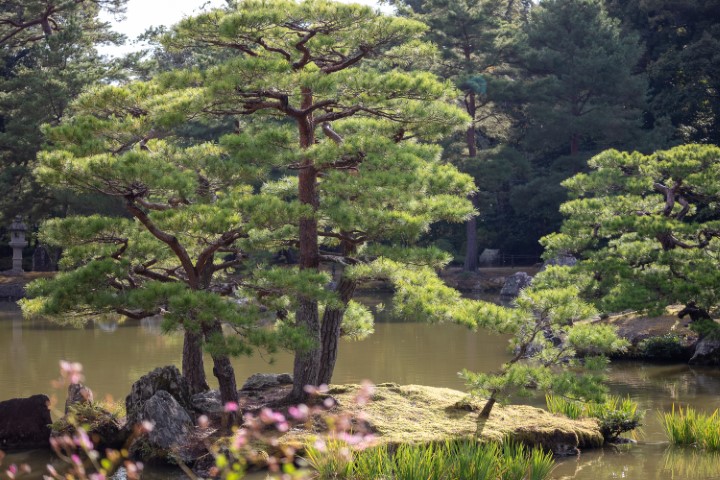
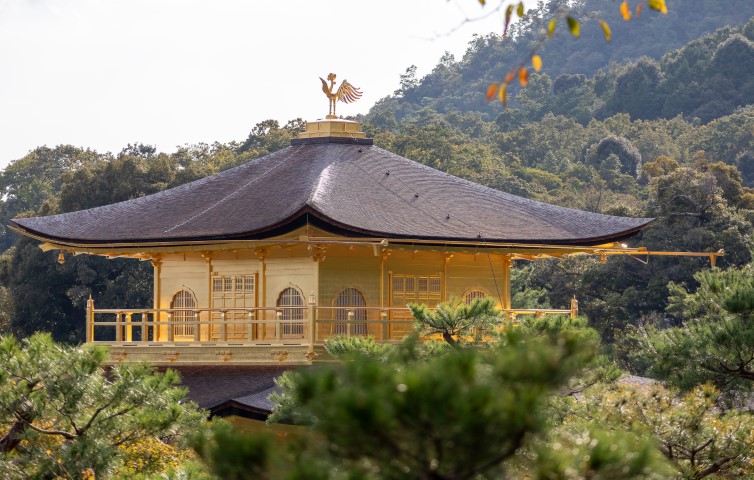
We arrive at Kinkaku-ji, where a crowd is already present (yes, it was a bit of a day for hyper-tourist attractions today). We pay the required 500¥ to enter. This temple, also known as the Golden Pavilion, is very popular with tourists but is somewhat shunned by the Japanese, who find it a bit too gaudy; however, it tends to appeal more to Chinese visitors.
The site is very beautiful: the reflection of the temple on the pond is worth seeing. However, the visit is really marred by the horde of tourists present. If you are preparing to visit Japan and wish to enjoy the calm and serenity that temple visits bring, you might want to skip this one: you’ll find plenty of other temples in Kyoto that will better meet your expectations. Ginkaku-ji is often cited as a less touristy alternative to the Golden Pavilion.

We return to our accommodation to do a quick laundry and look for a place to eat. We are a bit off the beaten path and few gluten-free options are available to us.
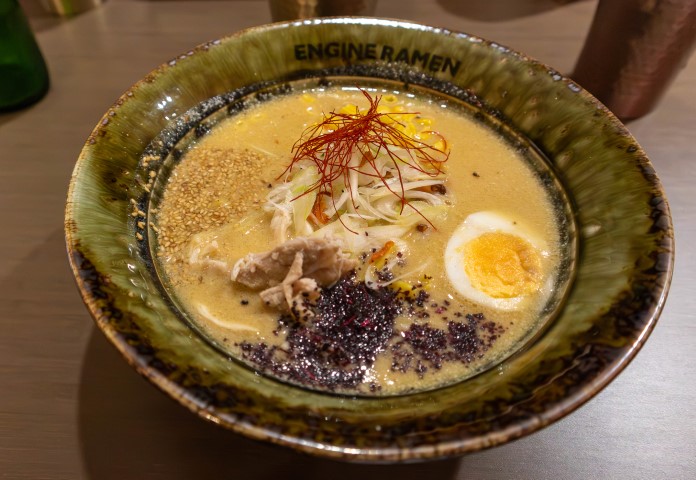
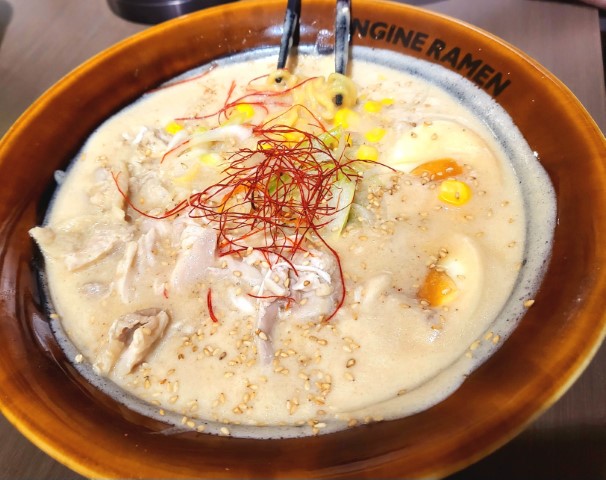
So we decide to spend the evening in central Kyoto, which we can easily reach by subway. We head to Engine ramen, a restaurant known for its…ramen, obiously. There is a wait (45 min), but there’s no need to wait idly; we are given a time to come back. This allows us to explore new streets in Kyoto at night. The nightlife is much more lively and uninhibited. We take a detour through Nishiki market, where most of the stalls are closed, but Nicolas can still enjoy takoyaki (fried octopus balls, a specialty from Osaka). Nicolas and Kevin can also have taiyaki, those famous fish-shaped pastries with different filling flavors (red bean, custard, chestnut…).
We return to Engine ramen at the time we were given, and we are let directly into the restaurant. We literally indulge in our respective ramen. The staff also speaks very good English, which makes communication easier. At the end of the meal, Nicolas tries once again Totemo yokatta desu to express that he found the meal very good (which is true). This has the same effect as the first time. The waitress will lower her gaze and seems embarrassed by the comment. Once again, we looked her in the eyes while saying the phrase, and we can’t tell if it was due to the phrase or our gestures.


Day 4: Obubu Tea Farm, Guided Tour to Become a Tea Master
Today we have planned an introduction to tea. The program is packed and includes a presentation in the room, a visit to the tea fields, lunch, and a tasting. We have chosen Obubu Tea Farm because their program seemed the most comprehensive with 4 hours dedicated to tea.
The day begins with our journey to the locality of Wazuka known for its agricultural activities, whether it’s rice or tea, for which it is renowned throughout Japan.
Getting there is not the simplest task, but when we signed up for the guided tour, we received very clear instructions on how to reach the farm.
We take the bus for the first time, armed with Google Maps to ensure we get off at the right stop. For the ticket, everything happens on the bus. We don’t have any change, so we put a bill into the machine on the bus: it gives us the necessary coins to pay for our ticket.
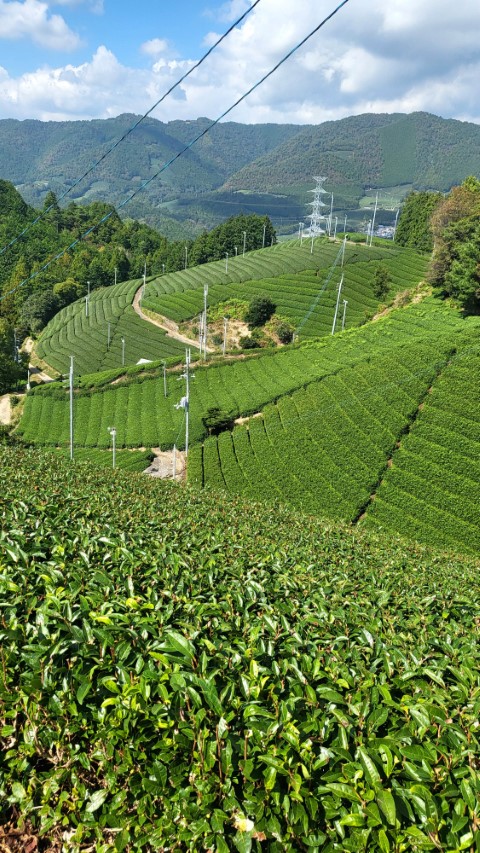
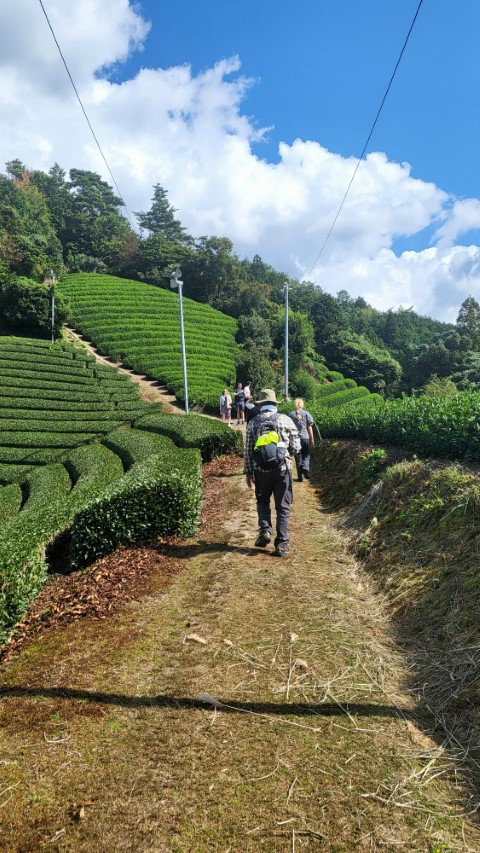
Upon our arrival, we observe the landscapes of the Japanese countryside for the first time. We find ourselves amidst hills adorned with tea and rice fields all around. Once again, these landscapes are not entirely unfamiliar to us, as we can clearly recognize the scenes depicted in various films from Studio Ghibli.
The town of Wazuka was also included in the association of « the most beautiful villages in Japan » in 2015.


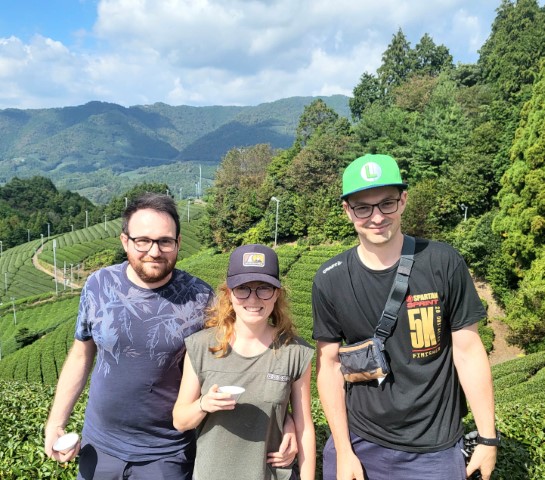
We are greeted by Hiro, a colorful tea enthusiast. He is dynamic and cheerful, which allows him to convey his passion in a playful and interactive manner. We also meet the current trainees who will participate extensively in the guided tour.
During the presentation, we are served different teas with very distinct flavors: everyone will find something they like. We taste, among others:
- Genmaicha (a blend of green tea and roasted rice)
- Hojicha (roasted green tea) with different levels of roasting.
- Sencha Tea after different steeping times but also with cherry blossoms
We are told that there are three tea harvesting seasons: the spring harvest, which takes place from late March to early May, the summer harvest from mid-August to mid-September, and the autumn harvest, which occurs between late September and early November. The spring harvest produces the least bitter tea because the leaves have not yet been exposed to high temperatures. However, it is the latter that is partly responsible for the release of catechins, which give tea its bitter taste. The Japanese, who generally fear bitterness, particularly appreciate spring tea, known as ichibancha.
Sencha tea has long been the most cultivated tea in Japan, but Matcha tea is taking an increasingly significant share due to the rising international demand that has increased significantly in recent years.
We are explained how the leaves are harvested by visiting the fields, after which we explore the traditional tea manufacturing process. To describe it better, we walk through the factory, which allows us to visualize the process clearly.
- The harvest: the process begins with the harvesting of the leaves. After harvesting, the leaves must be quickly transported to limit all oxidation phenomena.
- Fixation: Fixation is necessary for the production of green tea. The oxidation process is halted in order to preserve the green color of the leaves as well as the aromas. This process is accomplished here with steam.
- Rolling: This is during this stage that the tea’s aromas are released. The various pressures applied allow the cells to break open, releasing their aromatic compounds and giving the leaves their characteristic needle-like shape. The rolling is done in 4 stages: a coarse rolling, a primary rolling, a secondary rolling, and a final rolling. Only the last one is done with a machine. This stage is certainly one of the most delicate, as the leaves are hot, and they should not be crushed or broken.
- Machine drying: During the rolling process, the leaves begin to dry, but a final drying step is required. This is done using a machine. It allows the leaves to retain their needle shape, a shape that was given throughout the manufacturing process. While at the beginning, the leaves have a moisture content of 80%, at the end of the manufacturing process, they contain only 5% moisture.
- The manufacturing process concludes with a sorting (removal of stems and other unwanted residues), and packaging.
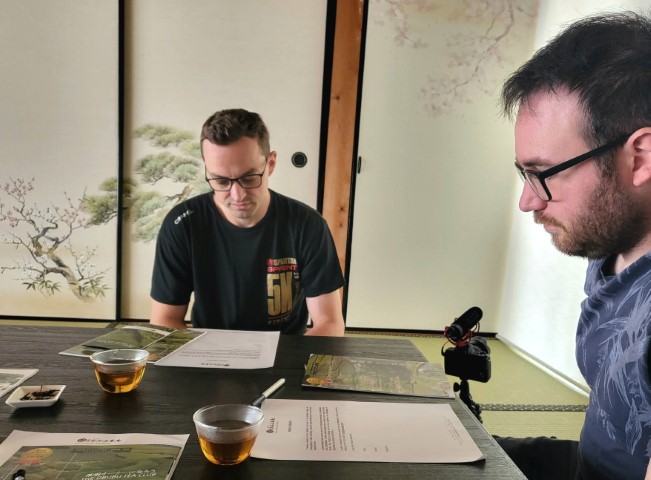
After the midday meal, we return to the room to move on to practice.
We infuse Sencha tea at 60°C for 90 seconds and then at 80°C for 15 seconds. Infusing at a low temperature helps limit the bitterness of the tea as it releases fewer compounds, and also because at lower temperatures, the bitterness is less pronounced.
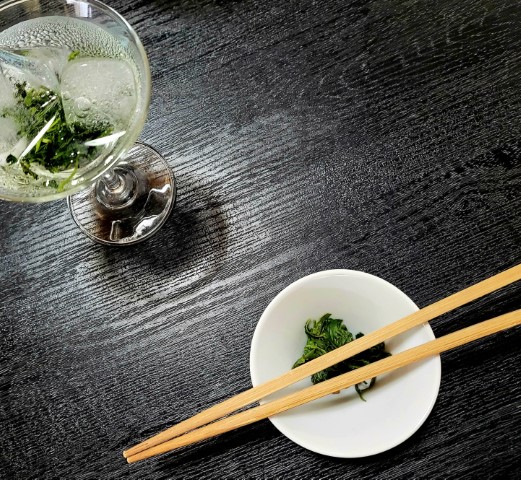
We are also invited to eat the leaves of Genmaicha in salad. For this, the leaves have been previously seasoned with soy sauce. Eva cannot taste it, but everyone seems pleasantly surprised by the tasting.
We also learn how to prepare matcha tea. We start by adding a tiny bit of room temperature water: this step helps prevent the formation of lumps, similar to preparing a pancake batter. Then, we add water at 80°C and whisk our mixture with a bamboo whisk (chasen) in a W and M motion. The goal here is to create as many bubbles as possible to maximize the flavor of the tea. While Nicolas and Eva are not fond of matcha tea, finding it too bitter for their taste, they find this one exquisite. Japan is known for valuing quality over quantity, which may explain this difference in taste.
Finally, we finish the tasting with cold-infused tea: we place 3 ice cubes on tea leaves and wait for them to melt. Unfortunately, after the tasting of matcha tea, not much flavor remains. This experience is worth repeating.
The tour ends like this and we really enjoyed it. I can only recommend you do it if you have time during your stay in Japan.



We ended the day with a second round at Engine Ramen and then returned to our accommodation to pack our bags. It was indeed our last day in Kyoto, and tomorrow we will head to Onomichi to cycle the Shimanami Kaido.
Our opinion on Kyoto and its surroundings
Our 4 days in Kyoto and its surroundings allowed us to get a glimpse of this city that has managed to retain its old-world charm by preserving numerous temples while modernizing in its downtown area.
Public transport is abundant and accessible: getting around is truly a child’s play, just as it is in the other Japanese cities we’ve visited. However, the number of JR lines is limited, and from an economic point of view, having a JR pass may not be the most favorable option.
The only downside I would mention about Kyoto is the bicycles. Bicycles are everywhere on pedestrian spaces, and they reign supreme. In Kyoto, cyclists pay little attention to you, and we narrowly avoided colliding with bicycles on numerous occasions; in other cities, cyclists are more attentive to pedestrians. We ultimately always ended up walking in single file on the sidewalks to continually make space for the bicycles: we no longer had to listen for them and didn’t need to turn our heads in every direction to check if any were approaching us.
You may hear that Kyoto has been overwhelmed by mass tourism, but I would nuance that. For our part, we « suffered » at certain sites, but these are well-known spots for being hyper-touristy. If you’re worried about that, just avoid these particular attractions, especially Kinkaku-ji. As for Fushimi Inari Taisha, once you pass the first torii, the crowd thins out, and regarding Arashiyama, just avoid « the bamboo grove. »
Finally, we visited in October, which is a time of lesser influence compared to April, which may affect our feelings.
Despite this drawback, we didn’t notice these few days passing by, and in 4 days you won’t have time to get bored. There are plenty of things to do here, and you can plan to spend more time in Kyoto. Initially, we had planned to stay there for 6 days, but we ultimately shortened this duration to balance our experiences during our 3 weeks trip.
Nos 4 derniers articles sur le Japon

Une nuit en ryokan inoubliable et authentique
Notre voyage au Japon était entre autre motivé par une envie de vivre la culture japonaise de l’intérieur. Quand nous avons entendu parlé des ryokan, ces hébergements typiques japonais et assez inqualifiables, nous nous sommes dit qu’il fallait qu’on l’ajoute à notre programme. Après avoir prospecté les offres, après nous être renseignés d’un peu plus…

Chez Nahoko pour apprendre à cuisiner japonais et sans-gluten
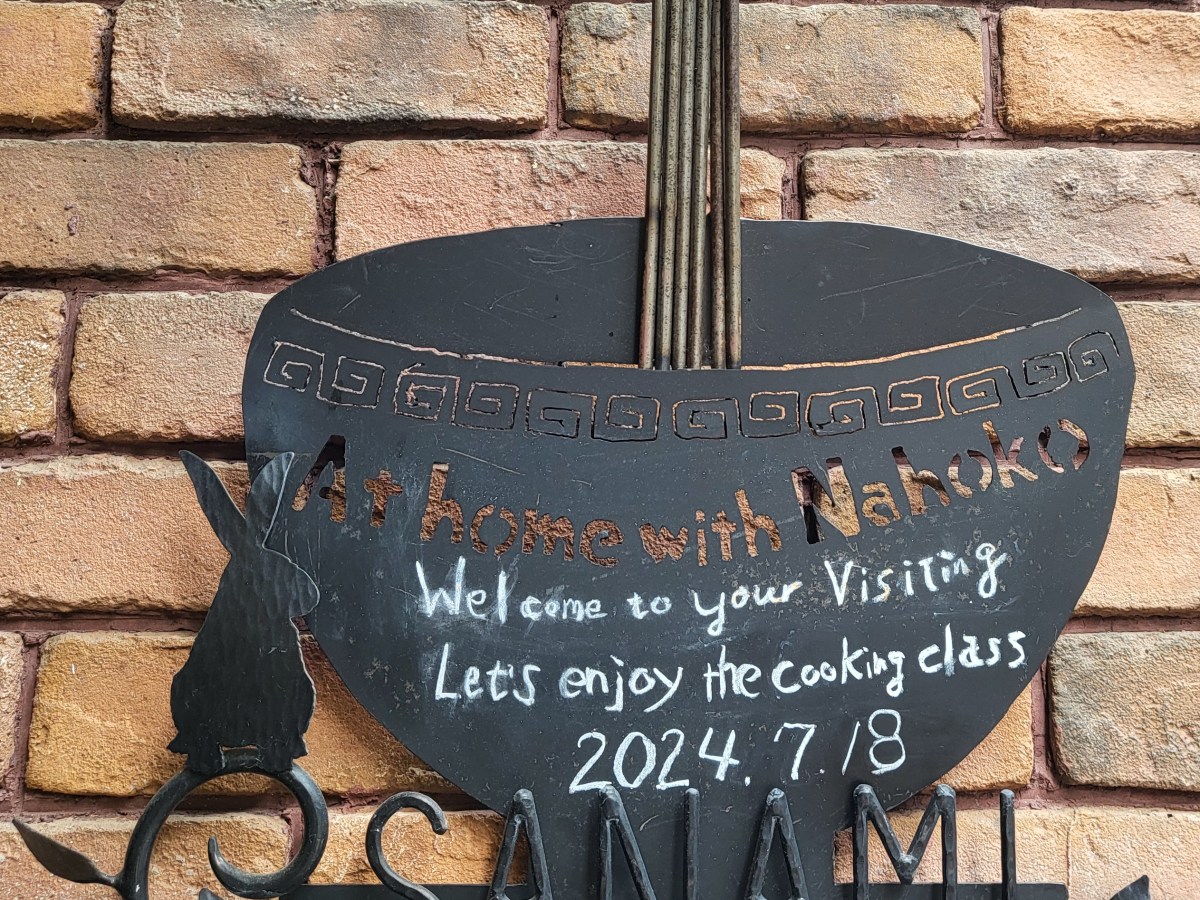
Et si on apprenait à cuisiner de délicieux plats typiquement japonais sans gluten ? C’est ce que nous avons fait pendant notre séjour à Tokyo. Nous nous sommes rendus chez Nahoko pour apprendre à cuisiner de délicieux délicieux ramens: des nouilles, au bouillon, à la garniture, tout est fait maison et sans-gluten.
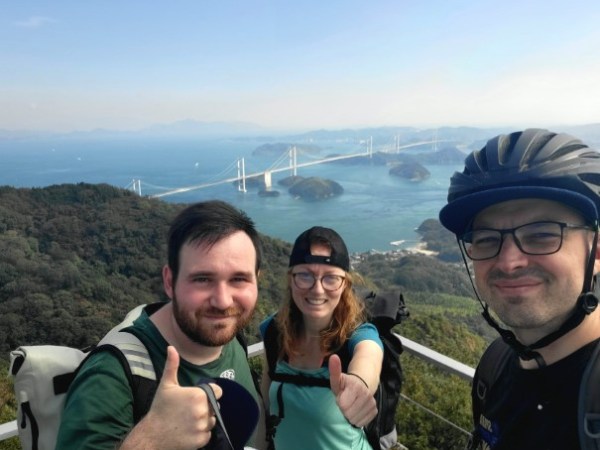
2 demi-journées pour parcourir l’incroyable parcours du Shimanami Kaido: de notre expérience aux informations pratiques
Le shimanami kaido vous connaissez ? C’est ce parcours cyclable bien connu au Japon qui permet de traverser 6 îles et de relier Honshû à Shikoku. On vous raconte ici notre histoire et on vous partage en fin d’article des informations complémentaires pour que vous aussi puissiez réaliser ce très joli trajet.
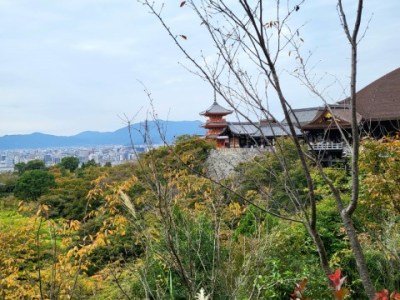
4 jours à Kyoto: entre tradition et modernité
On poursuit notre voyage au Japon avec l’ancienne capitale japonaise Kyoto. On vous raconte nos 4 jours entre modernité et traditions.
COMMENTAIRE
 Le goût du monde sans gluten
Laisser un commentaire